
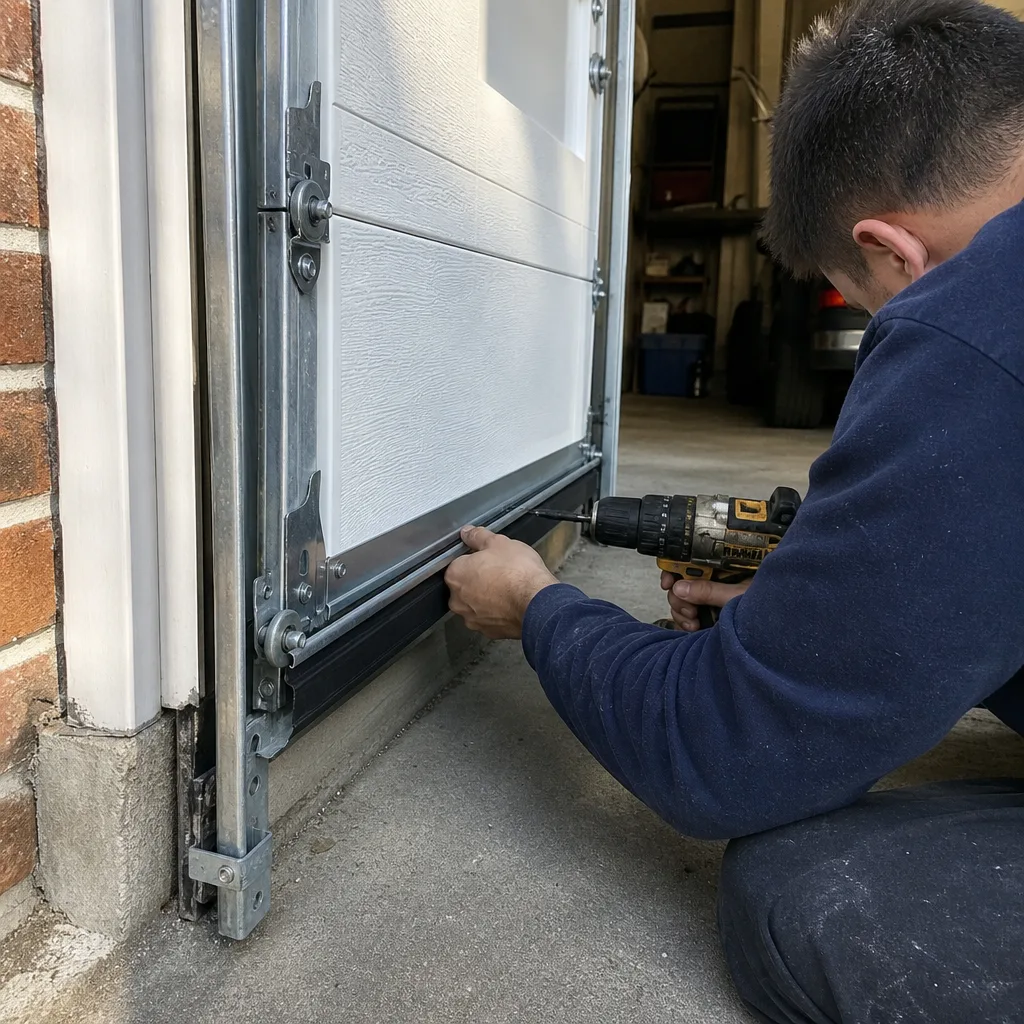
Last updated November 21, 2026
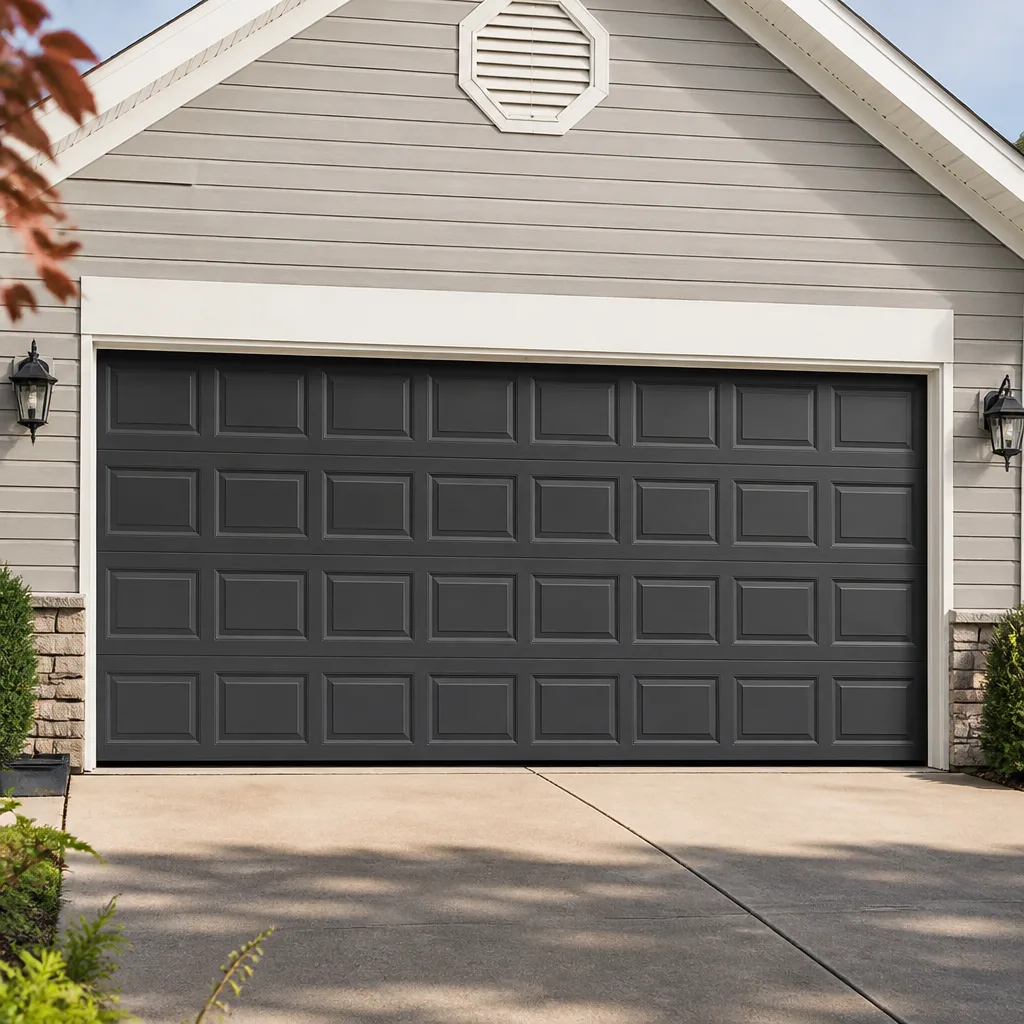 Raised-panel steel
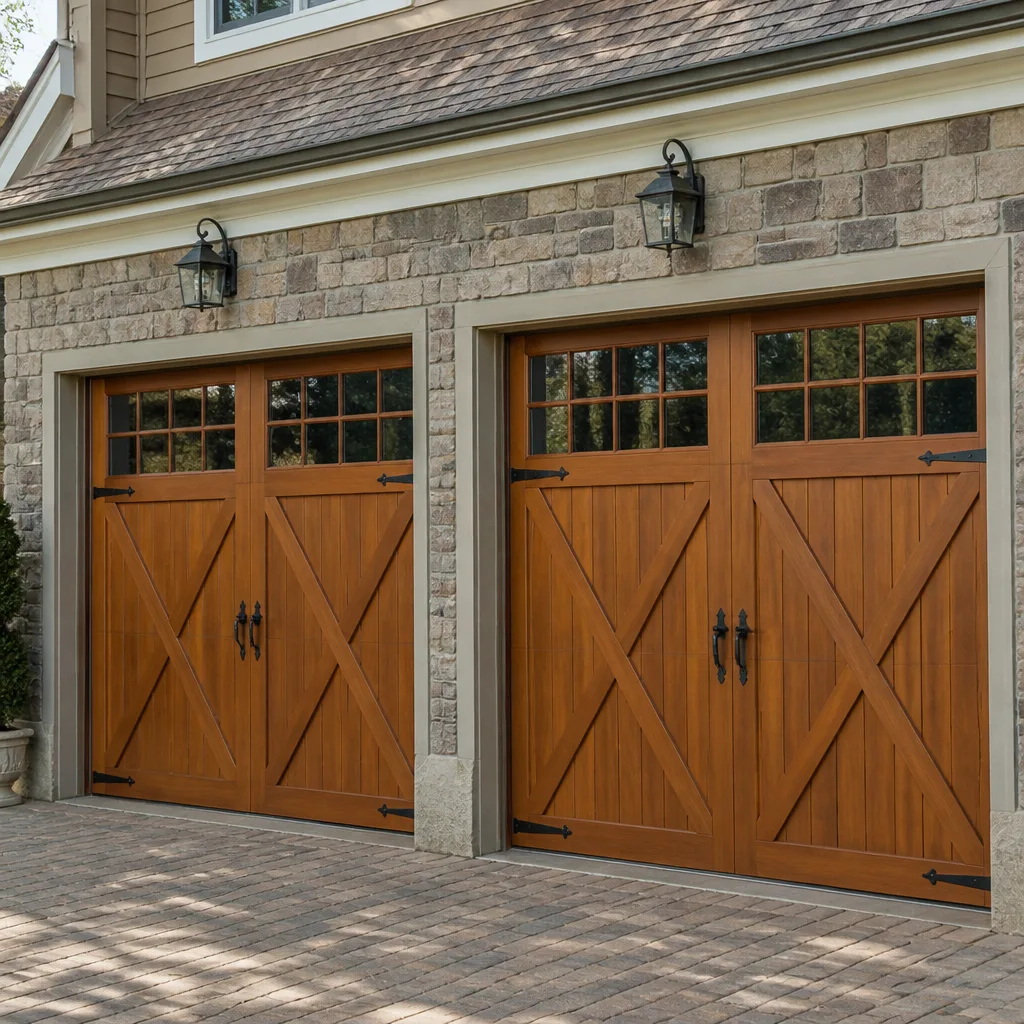 Carriage house
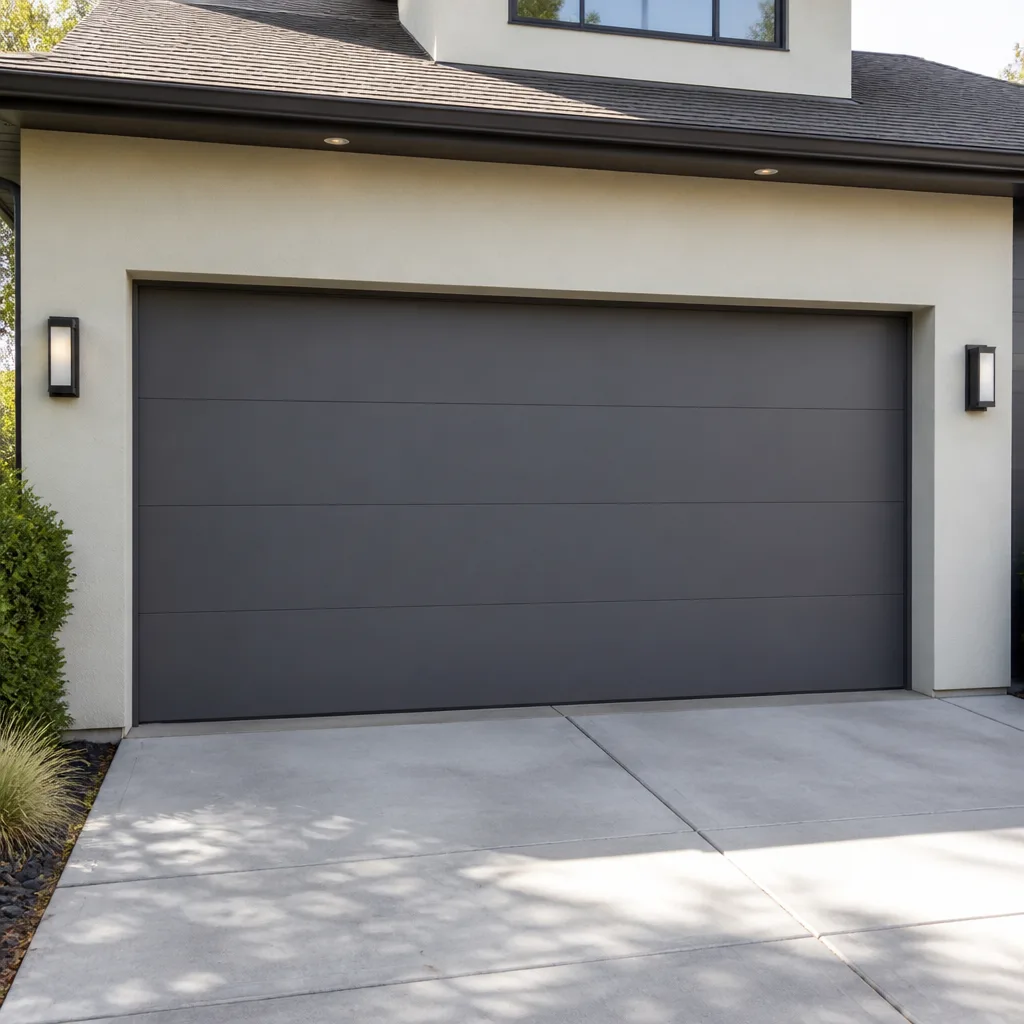 Modern flush
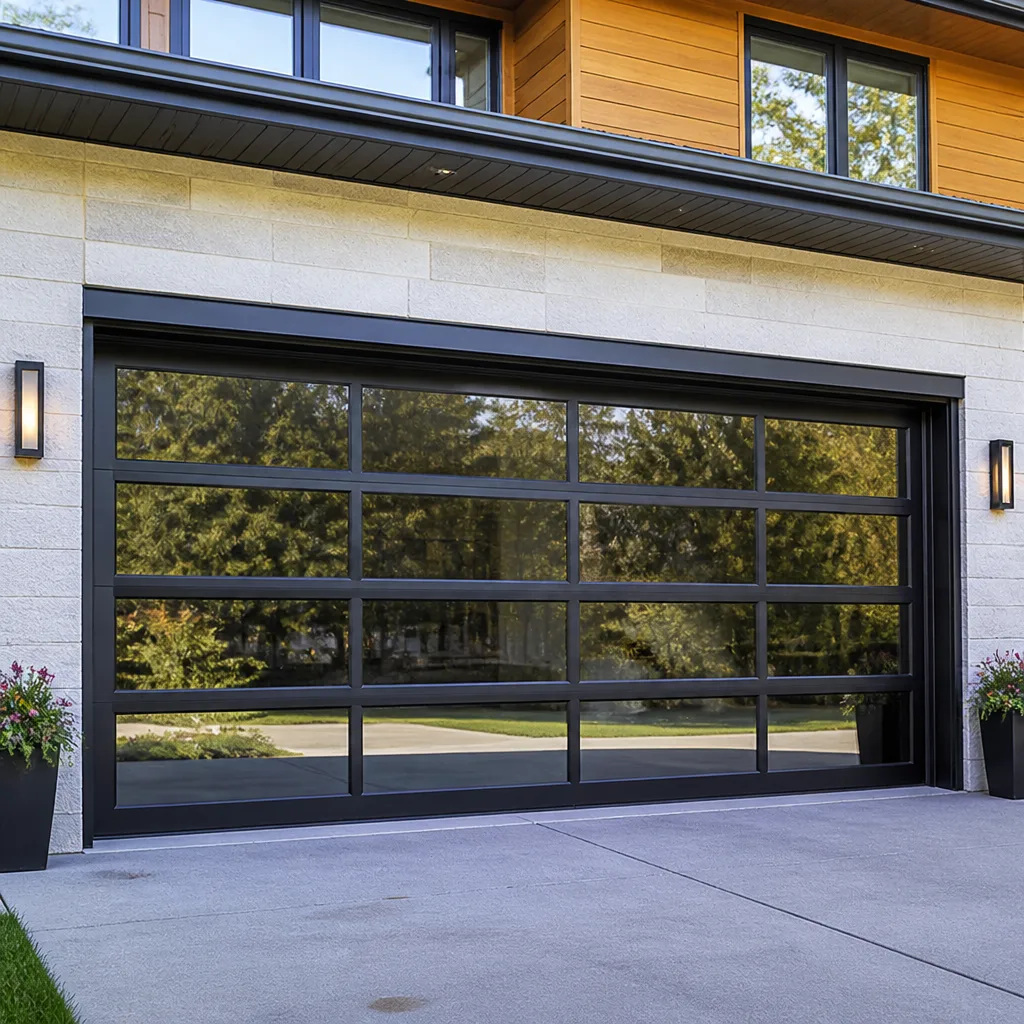 Full-view glass
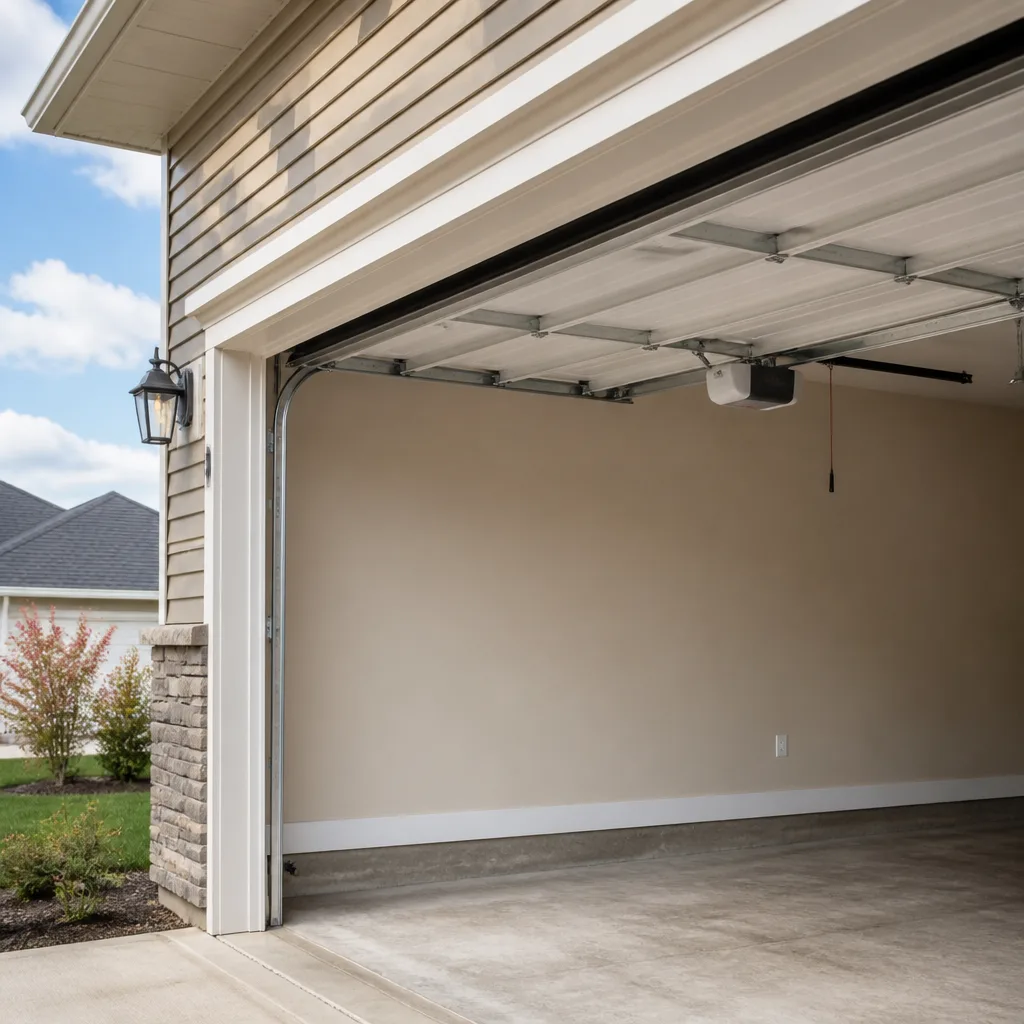 LiftMaster openers
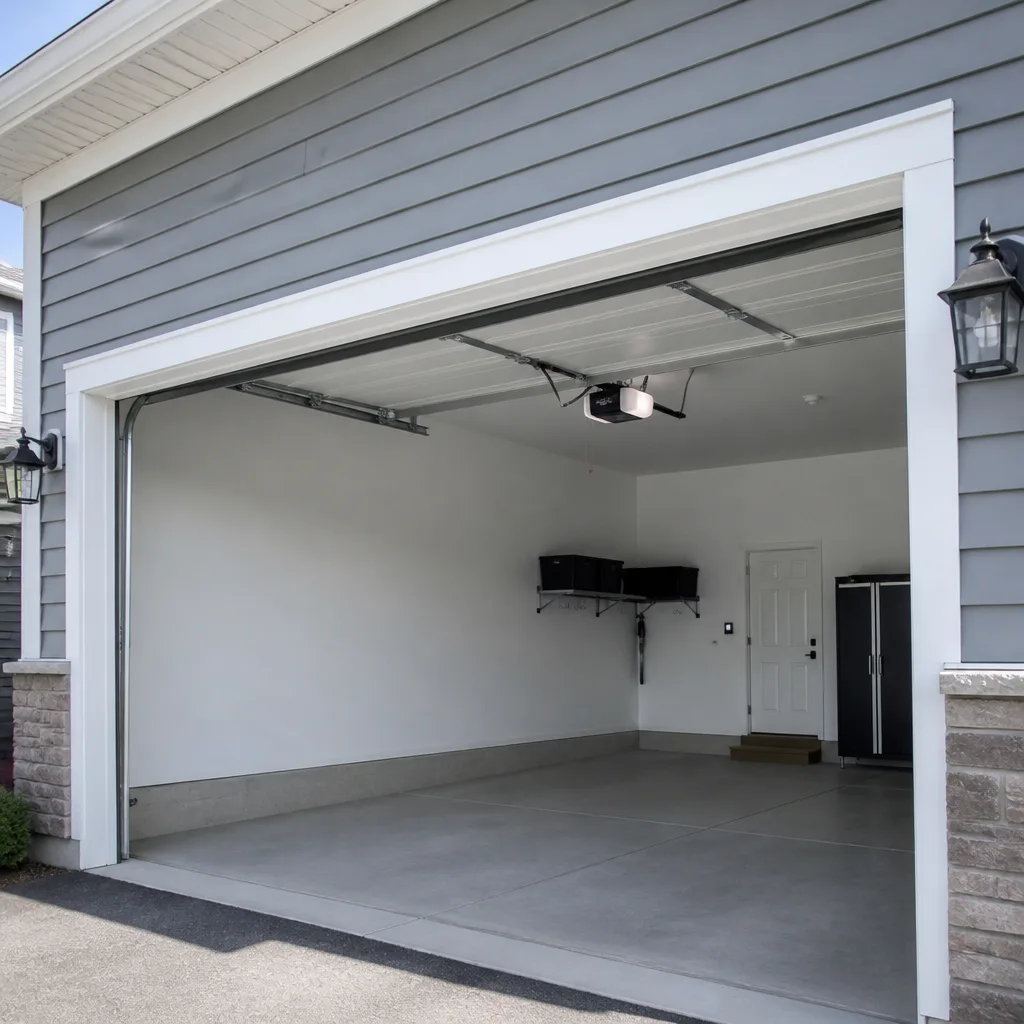 Chamberlain openers
Full 25-point door and opener safety check with every visit - springs, cables, rollers, tracks, and your LiftMaster or Chamberlain opener included
You get a price before we start. It does not change when the pro arrives.
Get your free estimateGarage Door Repair Troubleshooting in Carrick: Common Problems and How to Fix Them
A garage door that “just stopped working” is almost never a single failure. In our experience, it’s usually one worn component that cascaded into two others, and misdiagnosing which came first is how homeowners end up paying for the wrong repair. A grinding noise that sounds like a track problem is often a dry roller bearing. A door that won’t close may have nothing wrong with the door at all. We’ve built this guide to help Carrick homeowners read the symptoms first, then decide what’s safe to handle and what needs a trained technician. You’ll learn which noises point to which parts, how to run a balance test in under a minute, and which fixes carry real injury risk.
Quick Answer
Most garage door failures in Carrick come down to one of six mechanical categories: springs, cables, rollers, tracks, the opener, or the door panels themselves. You can safely handle small items like photo-eye alignment, limit switch adjustments, and trolley carriage swaps. Anything involving torsion springs, cables, or the counterbalance system should go to a trained technician, because those parts store enough energy to cause serious injury. When in doubt, call a pro before you touch a wrench.
Styles & brands we work with
- Raised-panel steel
- Carriage house
- Modern flush
- Full-view glass
- LiftMaster openers
- Chamberlain openers
Table of Contents
- The Symptom-to-Cause Matrix
- The 30-Second Door Balance Test
- Why Carrick’s Older Housing Stock Creates Specific Problems
- Safe Fixes vs. Call-the-Pros Repairs
- How to Read Your Opener’s Blink Codes
- Seasonal Troubleshooting for Carrick Homes
- Common Mistakes to Avoid
- When to Call a Professional
The Symptom-to-Cause Matrix: Map the Noise to the Part
Every garage door failure announces itself before it fully breaks. The trick is knowing which announcement belongs to which part. Here’s how we map symptoms to root causes, based on what our technicians hear on thousands of calls. If you can name the noise, you’re already halfway to the right repair.
- Loud bang, then the door won’t lift: A snapped torsion spring. This is the single most common failure we see. The bang can sound like a gunshot, and afterward the door feels impossibly heavy.
- Grinding that rises and falls with door travel: Usually a worn or dry roller bearing. Sometimes it’s the opener gear if the sound comes from the motor housing rather than the tracks.
- Popping or snapping near the top of the door: A torsion spring under load or a cable starting to slip its drum. Both need a professional, no exceptions.
- Scraping metal on metal along the track: A misaligned track, a bent section, or a track weld that’s pulled loose. The door is rubbing where it shouldn’t.
- Rattling in the opener rail: A worn trolley carriage or loose chain. On LiftMaster and Chamberlain belt-drive units, it’s often the carriage assembly, which is a swap most homeowners can handle once they know to look for it.
- Click-then-nothing from the motor: A dead opener gear, a fried logic board, or a stripped drive gear. The motor hums but the door doesn’t move.
What makes this matrix useful is the direction of travel. If you also notice the door is heavier on one side, unrelated to the noise, the problem is likely the spring or cable rather than the opener. If the door runs fine manually but not with the motor, the door is fine and the opener isn’t. That one distinction alone shortcuts a lot of wasted diagnosis. If your opener is the culprit, our garage door opener repair service handles the full range of brands and control boards.
The 30-Second Door Balance Test
Before you call anyone, run this test. It tells you whether the springs are pulling their weight or whether the whole problem lives in the opener. Do it when the door is closed and the opener is disengaged.
- Pull the red release cord to disconnect the opener carriage from the door. This is the manual-release handle hanging from the rail.
- Lift the door by hand to about waist height. A properly balanced door should move with steady, controlled resistance and no sudden lurching.
- Stop and let go at the halfway point. A healthy door holds its position, or drifts only slightly. A door that drops or flies upward on its own is out of balance.
- Lower the door gently and re-engage the opener by pulling the carriage back along the rail until it clicks into the trolley.
- Test the door with the opener. If it now runs normally, your problem is in the opener. If it still struggles, the springs are the cause.
Balance issues point to springs almost every time. On a torsion system, a door that won’t hold at halfway is telling you the springs have lost tension. That’s the point where a safe diagnosis becomes a professional repair, because you cannot re-tension a torsion spring without the right winding bars and the training to use them. If the door moves smoothly by hand but the opener struggles, you’re looking at an opener problem, and a technician can usually diagnose that from the motor and control board alone. Our Garage Door Repair Carrick team runs this same test on every call, and it’s often what separates a spring repair from an opener repair on the estimate.
Why Carrick’s Older Housing Stock Creates Specific Problems
Carrick is a neighborhood full of homes built across several decades, and the housing stock shows it. Many houses here have detached garages, low ceilings, and door systems that have been repaired piecemeal over time. Those features create problems that a generic troubleshooting guide won’t mention, and they come up on our calls across Carrick again and again.
Low-Ceiling and Clearance Issues
A detached garage with a low ceiling leaves very little headroom for the torsion shaft, the springs, and the opener rail. In some Carrick garages, the door barely clears the header when it opens, and any sag in the track or stretch in the springs turns into a scraping door. If your door scrapes at the top of its travel, look up before you look at the door. The clearance may simply not be there, and the fix is about adjustment rather than replacement. On some low-ceiling garages, a low-headroom torsion setup is the practical answer, and that’s a decision a technician should make after measuring the opening.
Spring Tension and Older Door Weights
Older Carrick doors are often heavier than modern ones, sometimes steel with wood inserts or solid wood panels. Heavier doors need springs rated for that load, and when someone replaces a door with a lighter model without swapping springs, the system runs out of balance. That’s a common root cause when a door sags on one side or lifts unevenly. If the door has been in place for a long time, the springs may simply have cycled out. Springs are rated in cycles, and a door that opens and closes several times a day reaches its rating faster than most people expect.
Detached Garages and Electrical Limits
A detached garage may have a single circuit and no convenient outlet near the opener. When the opener needs replacement, the electrical supply has to be checked too. On a Wayne Dalton or Craftsman opener in an older detached garage, we sometimes find the unit tripping a breaker rather than dying, which is a wiring problem rather than a door problem. In those cases the diagnostic starts at the panel, not the rail.
Safe Fixes vs. Call-the-Pros Repairs
Not every repair is a professional job. Some are genuinely safe for a homeowner with basic tools, and knowing which is which saves you money and keeps you out of the emergency room. Here’s our honest split. Pay attention to the risk column, not just the difficulty.
Safe for a Homeowner
- Photo-eye alignment: If the door reverses immediately after closing, check that the two sensors face each other and that nothing blocks the beam. A small nudge or a wipe of the lens often fixes it.
- Limit switch adjustment: If the door stops short of the floor or hits it and reverses, the travel limits on the opener can be adjusted by a small screw or a menu setting. Check your opener manual first.
- Trolley carriage swap: A worn carriage that rattles or slips can be replaced once the door is released and the opener is off. This is a bolt-on part on most LiftMaster and Chamberlain rails.
- Lubrication: A light application of garage-door lubricant on the rollers, hinges, and springs keeps things quiet. Never use grease on the tracks.
- Track cleaning and debris removal: Clearing leaves, toys, and grit from the track and the door’s path is safe and prevents a lot of false reverses.
Call a Professional
- Torsion spring replacement or adjustment: Torsion springs hold enough stored energy to break bones or worse. This is the one repair we never recommend for a homeowner, full stop.
- Cable and drum work: The cables are under the same tension as the springs. A slipping cable can whip loose without warning.
- Track replacement or realignment: A bent track needs to be replaced, not hammered back into shape. Attempting it can drop the door.
- Opener gear and logic board replacement: The motor capacitor holds a charge, and the board is easy to damage without a proper diagnostic.
- Panel replacement: A cracked bottom panel or a dented section that binds the door needs a matched replacement panel, which is a parts and fitment question.
One line to remember: anything that holds the door’s weight against gravity is a professional’s job. Anything that controls the door or sits above it can usually be handled by a careful homeowner. Our dedicated spring repair service exists for exactly that reason. When a spring lets go, the right call is the one that gets a trained technician to the door safely, and that’s what we do.
How to Read Your Opener’s Blink Codes
Most openers tell you what’s wrong with a blink pattern on the control panel or the safety-reverse LED. Reading those codes shortens the diagnostic from a guess to a checklist. Here’s how the three brands we see most in Carrick report common faults.
LiftMaster and Chamberlain
These two share most of their electronics, so the codes line up. LiftMaster and Chamberlain openers flash the main light a set number of times to indicate the fault. A rapid flash on the safety-reverse LED usually means the photo-eye beam is blocked or the sensors are misaligned. If the door closes then reverses and the light blinks, check the sensors first. If the opener clicks but doesn’t move and the light flashes a steady pattern, that’s usually a travel-limit or force-setting issue. Newer units with the myQ app often show the same code on your phone, which is a shortcut worth checking before you climb a ladder.
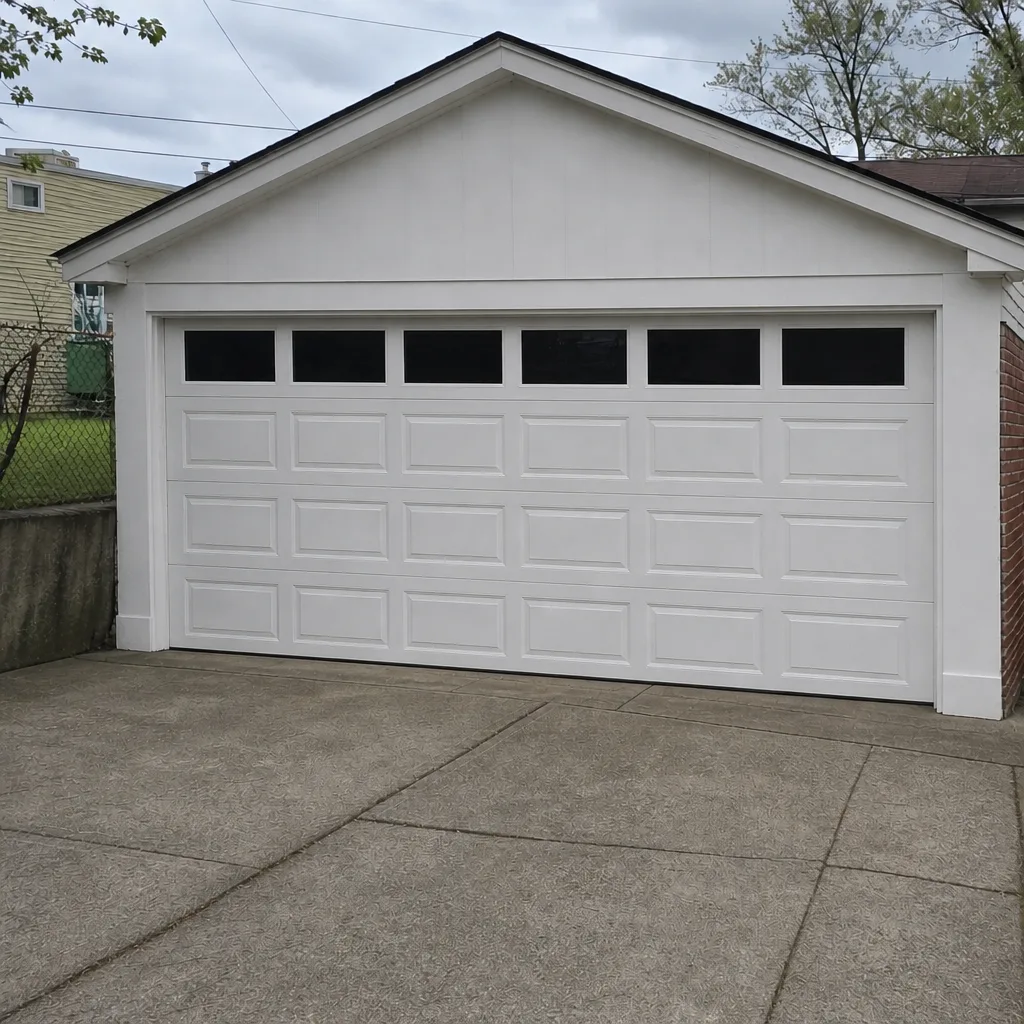
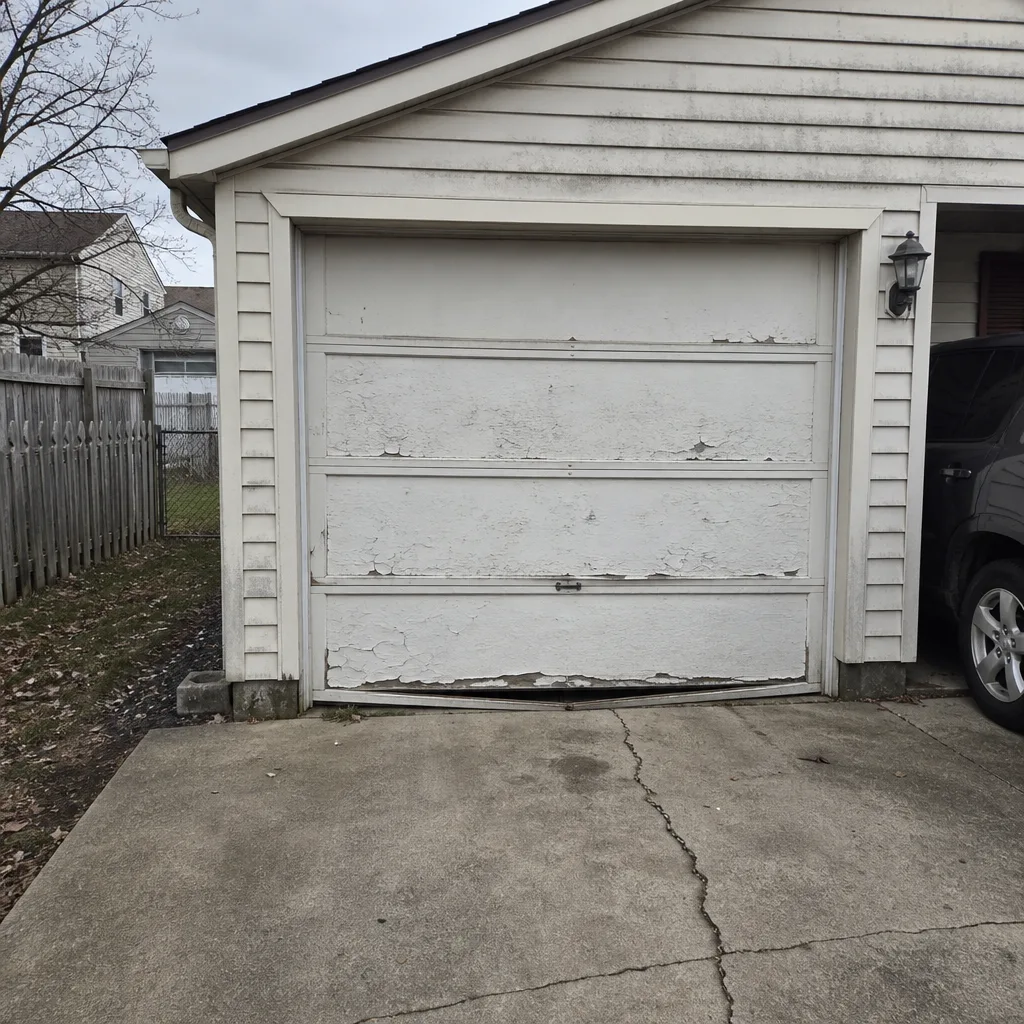
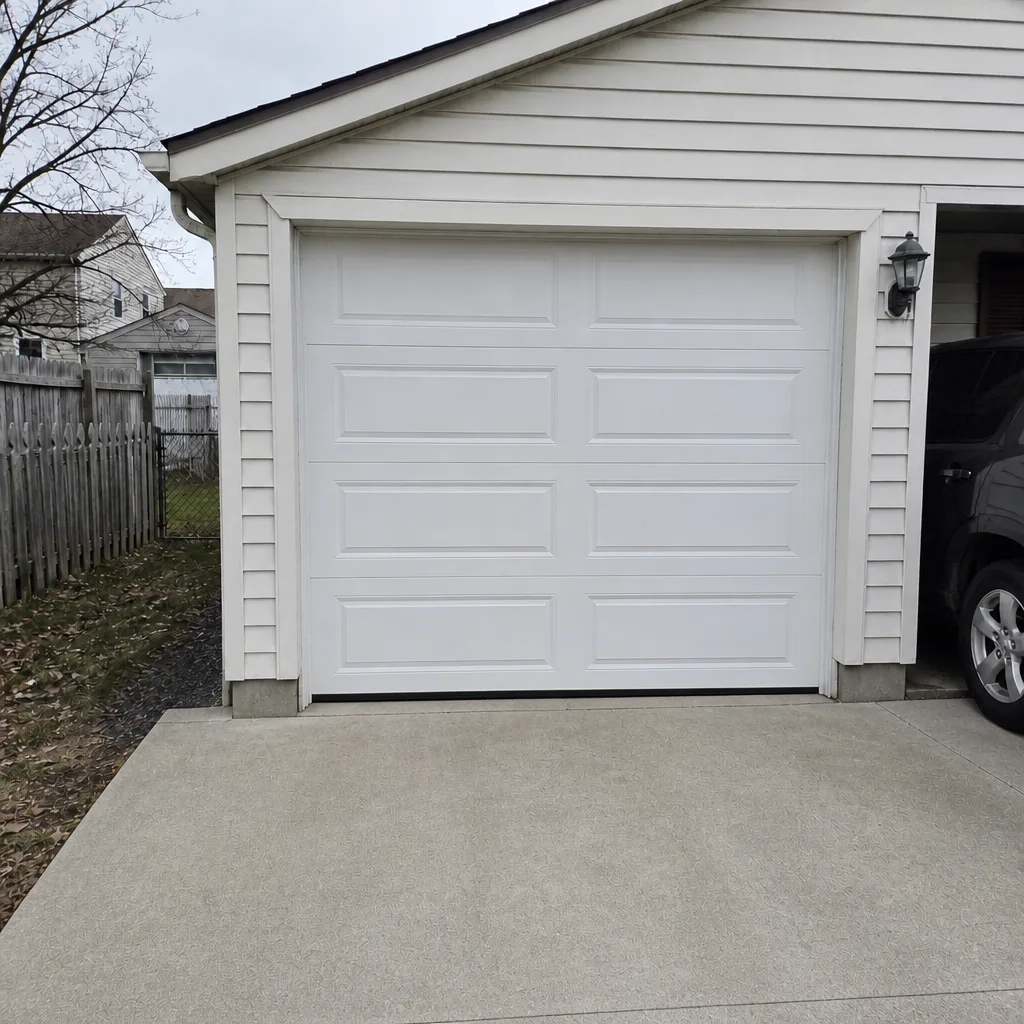
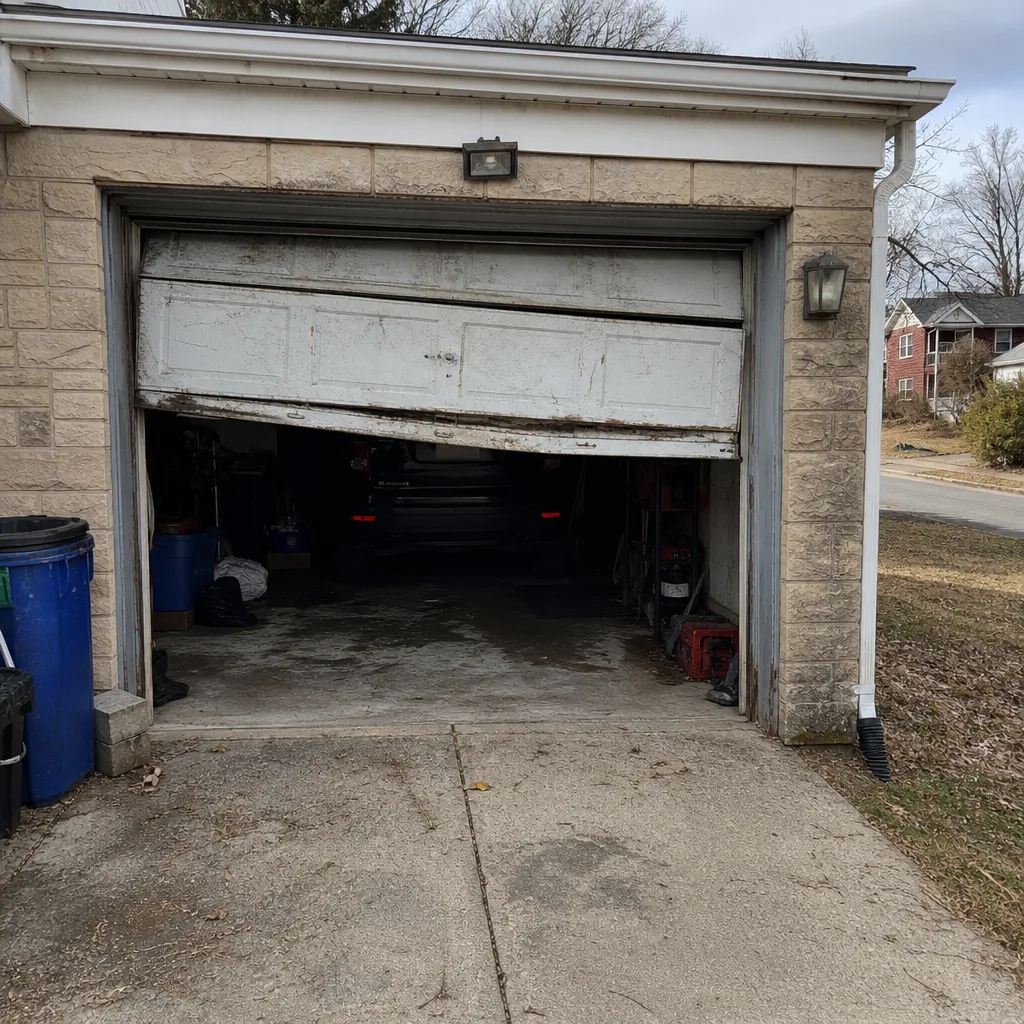
See the difference
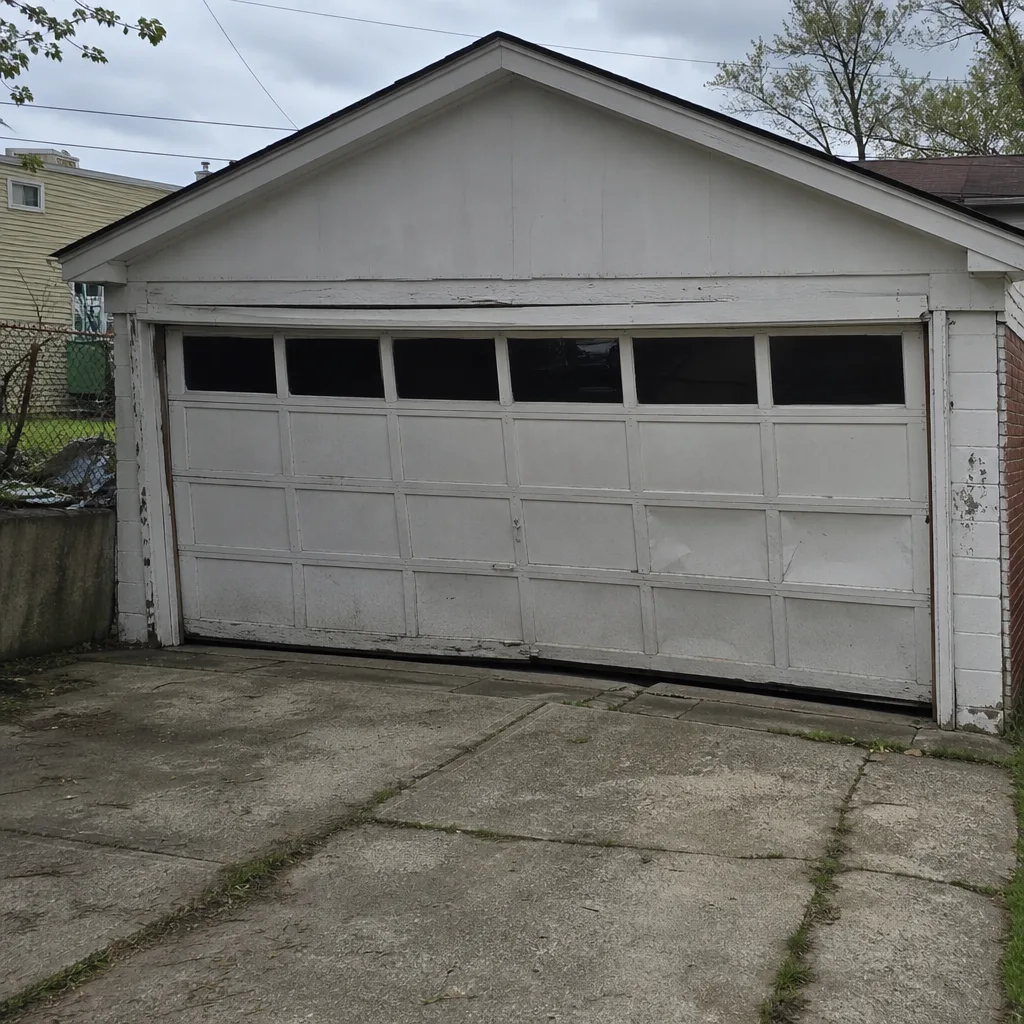 Before
 After
 Before
 After
 Before
 After
Genie
Genie openers tend to blink the main light or the wall console. A single flash, or a short series followed by a pause, maps to specific faults in the manual. A common Genie code indicates the safety beam is interrupted, which is often just a misaligned sensor or a spider web across the lens. Another common pattern points to a force-limit trip, which happens when the door meets resistance. That resistance is frequently a worn roller or a stiff hinge, so the code leads you back to the door, not the motor.
Craftsman
Craftsman openers, many of which share design lineage with Chamberlain, use a similar flash-count system. When the light blinks and the door won’t move, the first thing to rule out is the safety sensor. If the sensor LED is solid, the next check is the travel limit. Craftsman units also report a fault when the door is too stiff to move within the force setting, which tells you the door needs attention, not the opener.
The pattern to notice across all three brands is this: the opener is often the messenger, not the culprit. If the code points at the safety beam or the force limit, the actual problem is usually the door, the track, or the sensors. If you’ve checked the obvious things and the code persists, our technicians carry the diagnostic tools to read the system directly. That’s the value of working on these brands every day: your opener, our expertise, and no guesswork about which fault you’re looking at.
Seasonal Troubleshooting for Carrick Homes
Western Pennsylvania weather puts garage doors through real swings. Summer humidity loosens wood components and makes rollers glide less smoothly. Winter cold stiffens lubricant, shrinks metal slightly, and makes a marginal spring more likely to snap. Spring thaw brings water into detached garages, and that moisture gets into tracks and hinges. If your door starts acting up at the same time every year, seasonal change is a likely cause.
The practical response is simple: keep the tracks clean, keep the rollers lubed, and watch the balance test when the temperature drops. A garage door that’s out of balance in January was probably out of balance in October, just less noticeably. If the door groans in the cold and then quiets down in spring, that’s a lubrication issue, not a broken part. If it grinds all year, the problem is mechanical and won’t fix itself. If a door fails on a Saturday, we’re closed that day, but a call gets it booked into the next opening on Sunday.
Common Mistakes to Avoid
- Assuming the opener is broken when the door is heavy. A heavy door is a spring problem. Replacing the opener won’t fix it, and the new unit will burn out trying to lift the weight. Run the balance test first.
- Using WD-40 on the tracks. It attracts grit and makes the door slip. Use a garage-door-specific lubricant on the moving parts and leave the tracks dry.
- Replacing one spring in a pair. If the two springs are matched and one breaks, replace both. A single new spring against a worn one throws the door out of balance and shortens the new spring’s life.
- Pulling the manual release while the door is up. A door with a broken spring will slam down when released. Always release the door when it’s fully closed.
- Adjusting the force setting to “fix” a stiff door. Turning up the force just makes the opener work harder against a mechanical problem and can damage the door or the motor.
- Bending a track back into shape. A bent track is weakened whether or not it looks straight again. It needs replacing.
- Ignoring a single blink. A blinking sensor light looks minor, but it’s the opener’s main safety check. Clearing it is quick, and leaving it is a hazard.
When to Call a Professional
Call us when the door won’t balance, the spring has broken, the door is stuck partway, or a cable is loose or damaged. Those are the calls where a homeowner attempt can turn a straightforward repair into an injury or a bigger bill. Call us too when the opener code persists after you’ve checked the sensors and the door path, or when the door is scraping a track you can’t see the cause of. We offer free estimates in Carrick. Call (833) 508-9951. We answer 24/7. Fast dispatch from 7am to 7pm, Sunday through Friday. Our technicians have up to 12 years of experience, and every price is quoted and agreed before any work starts. If you’re weighing a repair against a new door, our garage door installation team can walk through the options with a free measure and a written price.
How do I know if my garage door problem is the spring or the opener?
Run the manual balance test: release the opener and lift the door by hand to halfway. If it won’t hold its position or feels very heavy, the springs are the problem. If it moves smoothly by hand but the opener won’t drive it, the opener is the problem. Call (833) 508-9951 for an exact quote, because estimates are free.
Can you come today for a garage door repair in Carrick?
Yes, same-day service is often possible when you call and a slot is open. Fast dispatch runs from 7am to 7pm, Sunday through Friday. Call (833) 508-9951 and we’ll book you into the soonest opening.
Why does my door reverse right after it touches the floor?
The opener’s travel limits or force settings are the usual cause, and a misaligned photo-eye can do it too. Check the sensors first, then look at the limit switch. If the door reverses with the sensors clear, a technician can reset the limits. Call (833) 508-9951 for an exact quote.
How often should garage door springs be replaced?
Springs are rated in cycles, not years, so replacement timing depends on how often your door opens and closes. A door used several times a day will reach its rated cycles sooner than one used twice a day. If your door no longer holds at halfway in the balance test, the springs are nearing the end. Call (833) 508-9951 for an exact quote, because estimates are free.
Can I replace my own torsion spring?
No. Torsion springs store enough energy to cause serious injury, and the winding process requires proper bars and training. This is the one repair we never recommend for a homeowner. Call (833) 508-9951 and our spring repair team will handle it safely with a price agreed before any work starts.
Will you work on my brand of opener or door?
Yes. We’re factory-familiar with LiftMaster, Chamberlain, Genie, Clopay, Amarr, Wayne Dalton, Craftsman, and Raynor systems. That covers the budget units and the app-connected smart openers. Call (833) 508-9951 for an exact quote – estimates are free.
What should I check before calling for garage door repair?
Clear the door’s path, check the photo-eye sensors and their LEDs, run the balance test, and note any blink code on the opener. That information shortens the diagnostic and helps the technician bring the right parts. If you’re in Carrick, our garage door repair team can use it to quote accurately. Call (833) 508-9951 for an exact quote.
The Bottom Line
Most garage door failures in Carrick trace back to six mechanical categories, and once you know which one you’re facing, the decision is simpler. Springs and cables are always a professional’s job. Sensors, limits, carriages, and lubrication are safe to handle yourself. Reading the noise and running the balance test tells you which camp you’re in before you spend a dollar. The Carrick-specific factors matter too: low ceilings, heavier older doors, and detached garages narrow the diagnosis in ways a generic guide won’t. Start with the symptoms, check for blink codes, and call us when the door won’t hold its balance.
Frequently Asked Questions
Diagnosis and repair pricing depends on the part involved, and the written estimate sets the final price before any work starts. Estimates are free. Call (833) 508-9951 for an exact quote.
Same-day service is often possible when a slot is open. Call (833) 508-9951. We answer 24/7. Fast dispatch from 7am to 7pm, Sunday through Friday.
No. The written estimate is the price, and it’s agreed before any work begins. If we find something different on-site, we tell you before we touch it. Call (833) 508-9951 for an exact quote.
The local pro we connect you with is licensed and insured as their state requires. Call (833) 508-9951 for an exact quote.
Yes. We supply garage door parts, which cuts the “we have to order that” delays smaller operators run into. Call (833) 508-9951 and we’ll confirm what your door needs.
We’re closed Saturday. Call and we’ll book you into the next opening, Sunday through Friday, 7am to 7pm. We answer 24/7, so a call outside dispatch hours goes into the next opening.
Call (833) 508-9951 for a free estimate. We answer 24/7. Fast dispatch from 7am to 7pm, Sunday through Friday.
Written by the team at Garage Door Repair Carrick.