
Last updated November 21, 2026
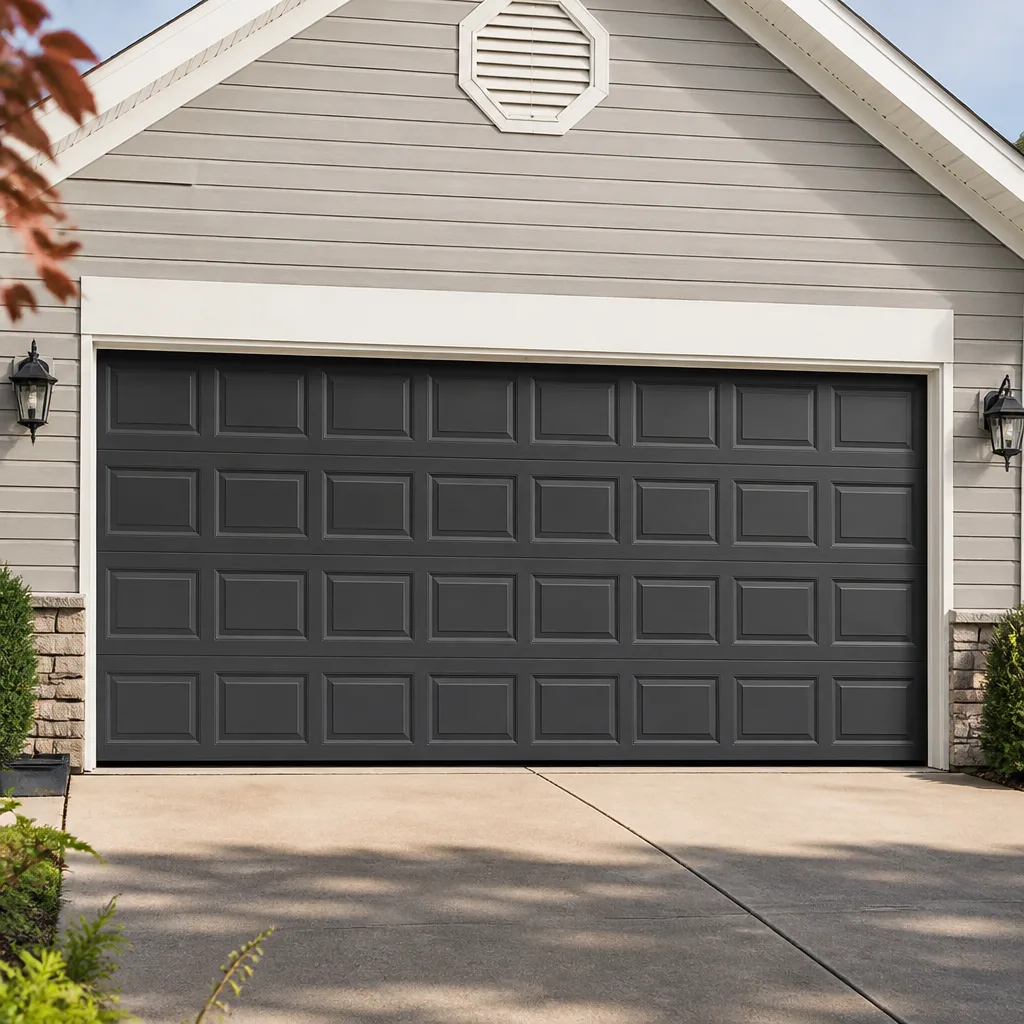 Raised-panel steel
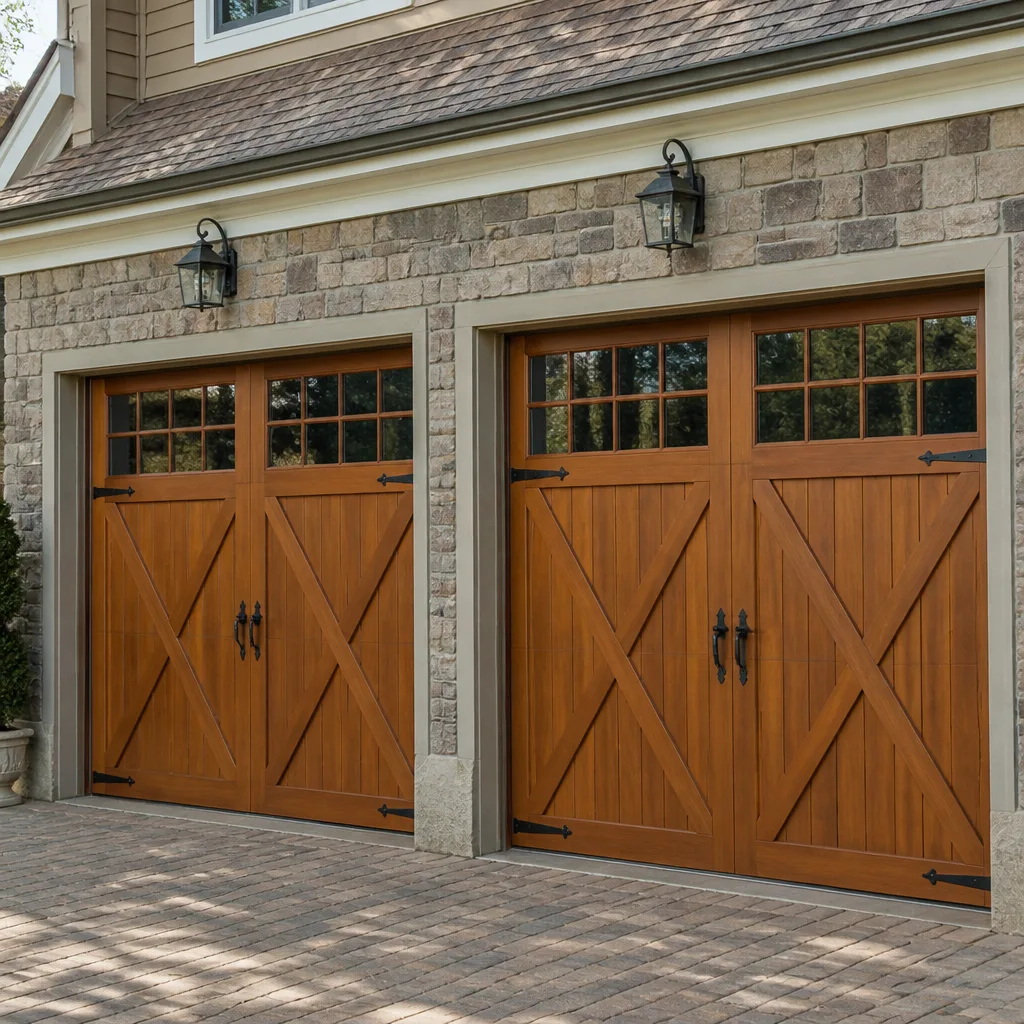 Carriage house
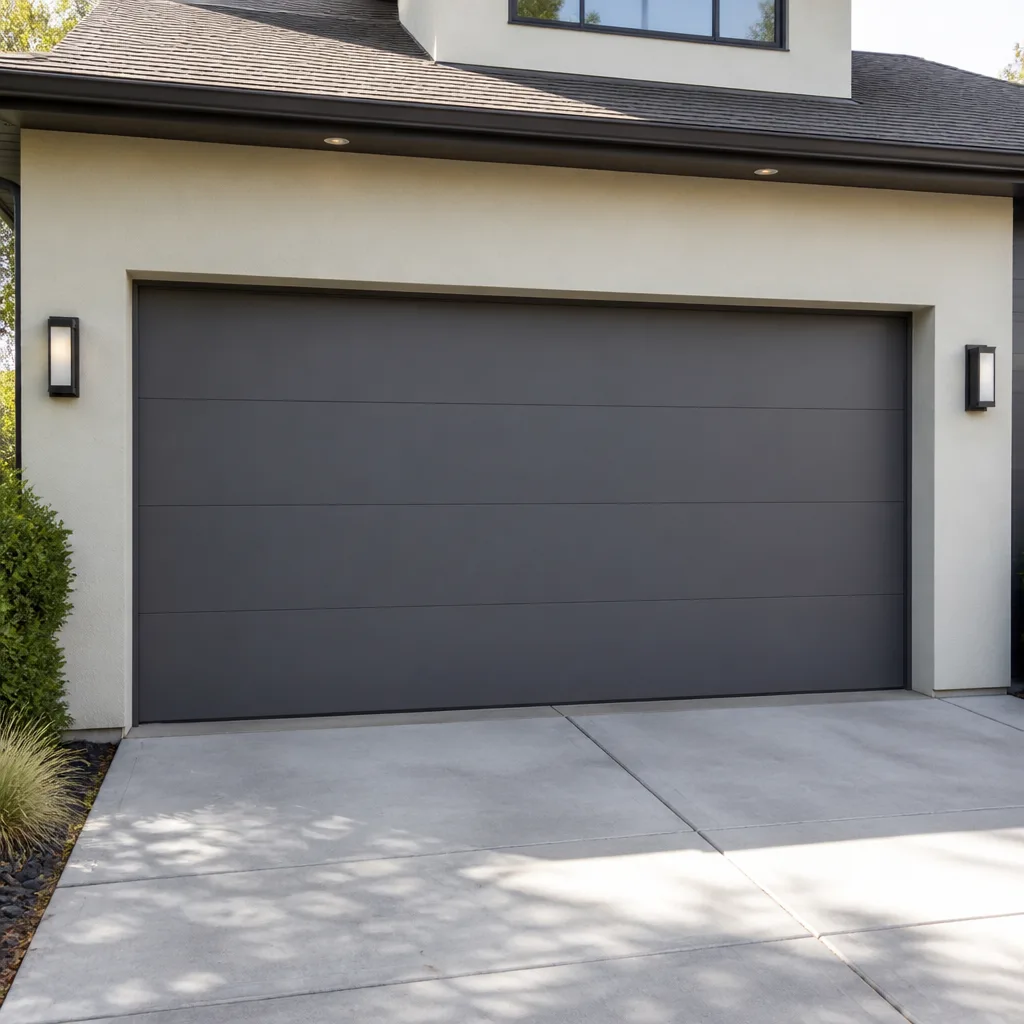 Modern flush
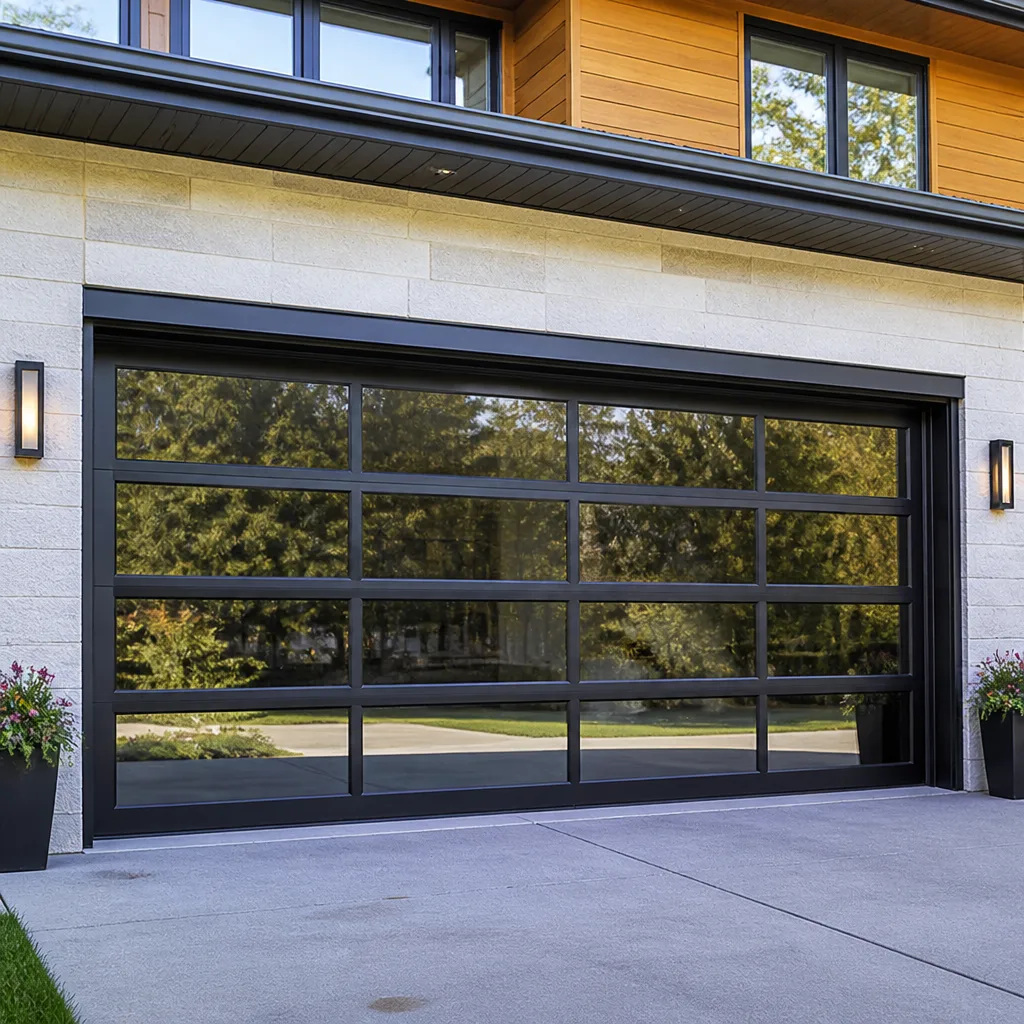 Full-view glass
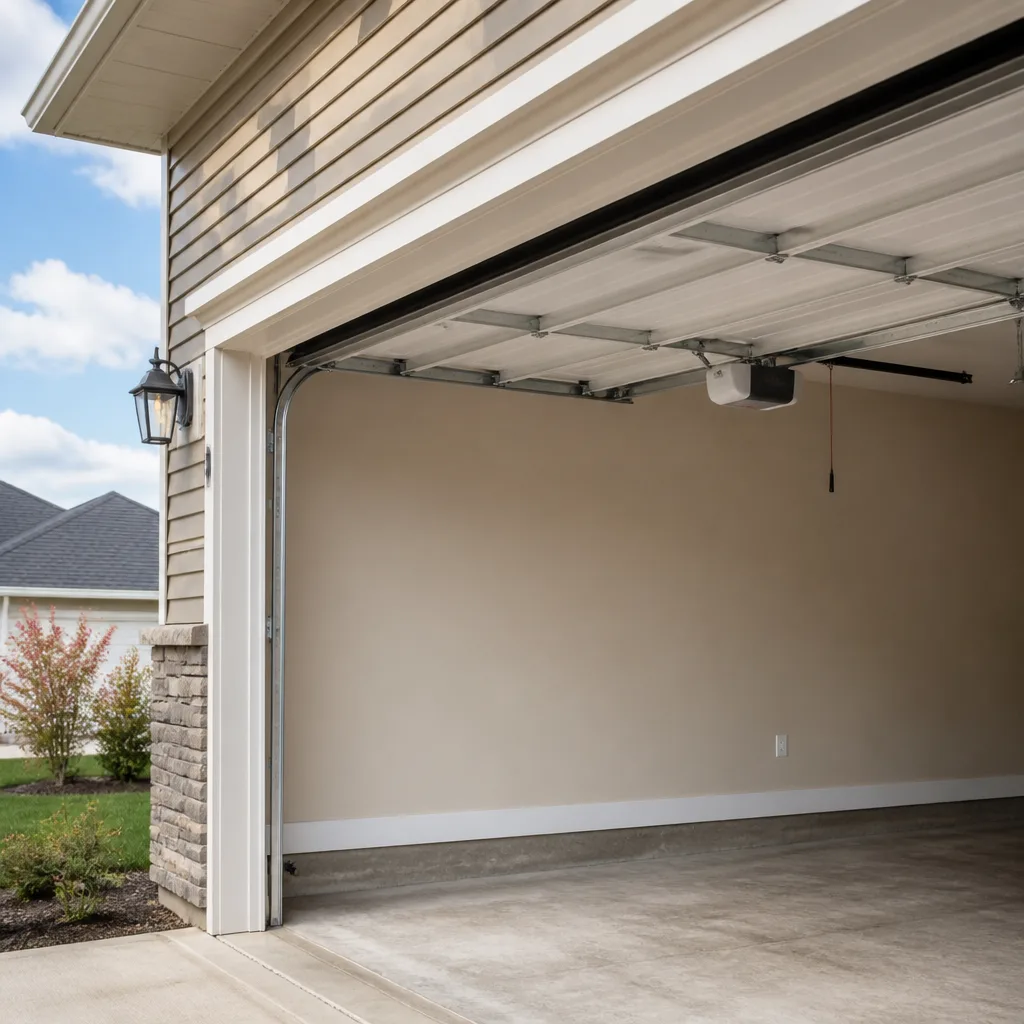 LiftMaster openers
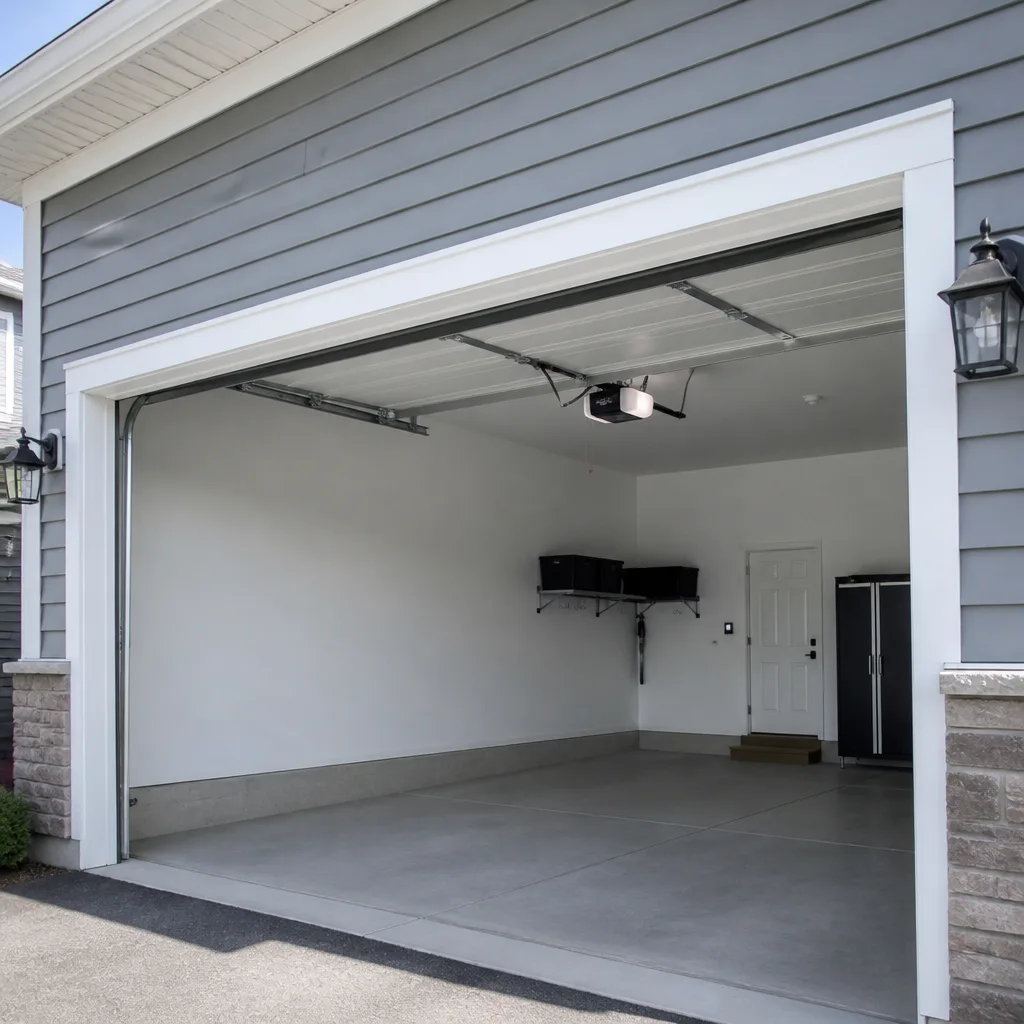 Chamberlain openers
Full 25-point door and opener safety check with every visit - springs, cables, rollers, tracks, and your LiftMaster or Chamberlain opener included
You get a price before we start. It does not change when the pro arrives.
Get your free estimateThe Complete Guide to Garage Doors in Carrick
Most Carrick garages were built before the 16×7 door became the industry default, and that single fact reshapes almost every decision a homeowner here faces. A standard replacement size that works in a new subdivision down the road often won’t fit a postwar Cape Cod or a hillside split without custom sizing or low-headroom hardware. Generic buying guides skip all of that. They assume a clean, modern opening with a foot of clearance above the door. In Carrick, you’re more likely to find a tight ceiling, a shallow trackset, or a rowhouse-adjacent footprint that constrains your options. This guide maps every major decision – door size, material, spring type, opener, and the parts in between – to the conditions you’ll actually run into in Carrick. By the end you’ll know what you’re looking at, what it should cost, and what to ask before anyone touches the door.
Quick Answer
Garage doors in Carrick usually need one of three things: a repair to an existing door or opener, a replacement sized to a non-standard opening, or updated hardware to handle the freeze-thaw climate. Typical repair costs run from about $90 for a simple adjustment up to $500 or more for opener replacement, while a full new door runs several hundred to a few thousand dollars depending on material and sizing. The written estimate sets the final price, and the price is quoted and agreed before any work starts.
Styles & brands we work with
- Raised-panel steel
- Carriage house
- Modern flush
- Full-view glass
- LiftMaster openers
- Chamberlain openers
Table of Contents
- How Carrick’s Housing Stock Changes Door Sizing
- Material Comparison for Pittsburgh’s Freeze-Thaw Climate
- Torsion vs. Extension Springs in Attached Garages
- Opener Compatibility with Older Carrick Wiring
- The Full Component Map: Every Part, Its Job, and Its Lifespan
- What Garage Door Work Typically Costs in Carrick
- A Maintenance Routine That Fits a Carrick Garage
How Carrick’s Housing Stock Changes Door Sizing
The biggest surprise for Carrick homeowners shopping for a replacement door is that the opening rarely matches a catalog size. Carrick’s housing mix – dense postwar Cape Cods, brick rowhouses, and hillside splits built into sloped lots – predates the 16×7 standard that most manufacturers treat as the default. That means a “standard” door may not be standard for your garage.
A single-car opening in a postwar Cape Cod is often 8 or 9 feet wide rather than the catalog-standard 8, and ceiling height can be tight. A hillside split with a garage tucked under living space frequently has low headroom – meaning less than 12 inches of clearance above the door in the open position. That’s the low-headroom problem, and it’s common in Carrick.
What low headroom actually requires:
- Low-headroom track and hardware – a trackset that routes the door closer to the ceiling using a different radius.
- A rear-mount torsion spring – instead of the standard shaft position, so the spring clears the tight ceiling.
- Possibly a different drum configuration – which changes how the cables wrap as the door opens.
None of that is exotic. It’s just not what a big-box guide tells you to buy. A rowhouse-adjacent build can also have a narrow apron or a tight reveal that limits how the door’s edges sit in the opening. If you’re replacing, the correct first step is a careful measure of the opening, the ceiling clearance, and the track depth – not a guess at “16×7.” That measurement is what a free estimate should include, and it’s where custom sizing gets settled before anything is ordered. For a replacement project, garage door installation starts with that measure, not with a product pick.
Material Comparison for Pittsburgh’s Freeze-Thaw Climate
Pittsburgh’s freeze-thaw cycles are the single biggest environmental stress on a garage door in Carrick. The door expands in the afternoon sun and contracts overnight in a cold snap, over and over, through winter and into spring. That cycle works on seams, joints, and the bottom seal more than on any one component, and the right material choice depends on how much of that movement a door can absorb without showing it.
Here’s how the three main material families hold up in this climate:
- Steel (single or double gauge) – the most common choice for Carrick replacements. A heavier-gauge steel resists denting better and holds its shape through expansion and contraction. Steel is also the most repairable surface if a panel is damaged, which matters for a repair-first approach. The trade-off is that the bottom edge and hinges are where condensation and freeze-thaw do their slow work, so the seal and hardware need attention.
- Wood composite – looks right on a Cape Cod or a brick rowhouse where a painted wood door fits the streetscape. Composite resists the moisture swings better than real wood, but it’s heavier, which puts more load on the springs and opener. In Carrick, that means spring sizing has to be matched to the door’s actual weight, not estimated.
- Fiberglass – light and won’t rust, which helps in a damp garage. The trade-off is that fiberglass can crack rather than dent on impact, and cracks are harder to repair than a steel panel. It’s a reasonable choice for a low-traffic door where weight matters.
The bottom line for Carrick: a steel door with a well-sealed bottom edge is the practical default, and wood composite is worth the extra weight only if the streetscape calls for it. Whatever you choose, the door’s weight drives the spring and opener selection – and that’s where a lot of replacements go wrong.
Torsion vs. Extension Springs in Attached Garages
Spring choice matters more in Carrick than in most places because so many garages here are attached to the house or tucked under living space. An attached garage shares a wall, a ceiling, and often a floor above with the rooms you actually live in. That changes what you want from the spring system above the door.
The two spring types work very differently:
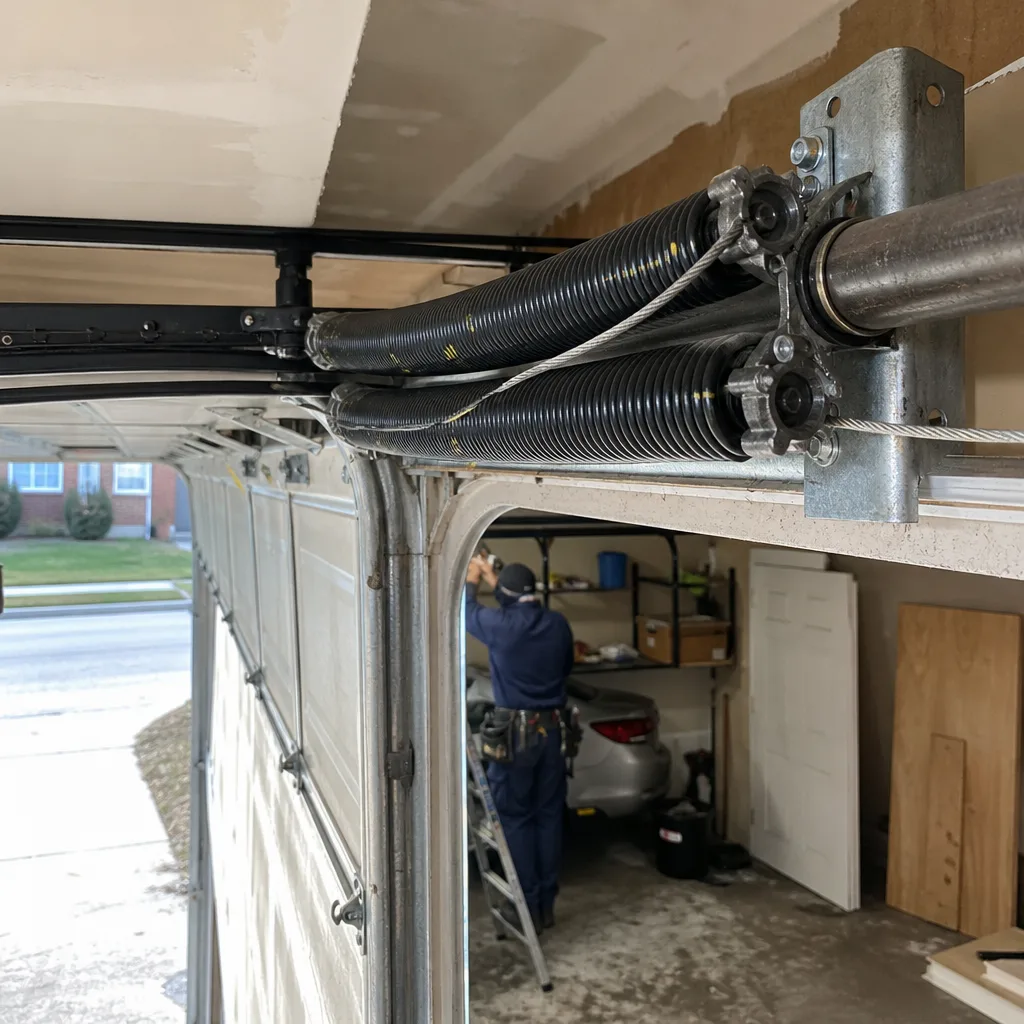
- Torsion springs mount on a shaft above the door and twist to lift it. They’re quieter, they fail in a contained way (the spring breaks but stays on the shaft), and a matched pair can be balanced precisely to the door’s weight. That precision is what you want when the door is directly under a bedroom.
- Extension springs run along the horizontal tracks and stretch to lift the door. They’re simpler and often cheaper to replace, but they need safety cables to contain a break, and they’re louder. On an attached garage, that noise carries into the house.
For an attached garage common to Carrick’s rowhouse-adjacent builds, a torsion setup is usually the better fit – quieter, more contained, and easier to balance. Extension springs still make sense on a detached garage where noise and containment matter less. The choice isn’t about which is “better” in the abstract; it’s about what your door’s weight, headroom, and placement call for.
Springs are also the most dangerous part of any garage door. A wound torsion spring or a stretched extension spring holds enormous stored force, and there’s no safe way to adjust or replace one without the right winding bars, the right technique, and a trained hand. We handle spring repair as its own dedicated service for exactly that reason. If a spring has snapped, call a professional rather than working around it – a door held up by one broken spring can come down hard.
Opener Compatibility with Older Carrick Wiring
A modern opener is a better machine than a 1990s unit in almost every way – quieter, smoother, and in the case of a LiftMaster or Chamberlain unit, app-connected. But in a pre-1980 Carrick home, the limiting factor is often not the opener. It’s the wiring and the electrical panel feeding the garage.
Older garages frequently have a circuit that was never sized for a modern opener plus a light plus a freezer. Modern DC-motor openers draw differently than the older AC units, and some smart openers want a clean, grounded circuit. If the panel is old or the garage circuit is shared, a new opener can trip a breaker or run erratically until the electrical side is sorted out. That’s a conversation to have before buying hardware, not after.
What to check before choosing an opener:
- The circuit serving the garage – is it dedicated, and is it grounded?
- The panel’s capacity – does it have room and headroom for the load the opener needs?
- The door’s weight and balance – a heavy wood-composite door needs an opener rated for it, and a smart opener won’t fix an unbalanced door.
- Brand familiarity – whether you’re keeping a Craftsman unit or moving to a Genie or LiftMaster, the right opener is the one matched to your door, not the flashiest one.
In our experience, most Carrick opener problems are one of three things: a worn drive gear, a failing logic board, or a safety-reverse sensor knocked out of alignment. All three are repairable without replacing the whole unit. If your opener is dead, garage door opener repair is usually the faster and cheaper path than a full swap – and it keeps the door you already have working with the brand it was built around. If panel or wiring work turns out to be needed, that’s licensed electrical work, and we’ll tell you so rather than improvise it.
The Full Component Map: Every Part, Its Job, and Its Lifespan
One of the most useful things a Carrick homeowner can have is a plain-language map of the door’s parts – what each one does and roughly how long it lasts. It turns a vague “something’s wrong” into a conversation you can have on equal footing with any technician, and it makes it obvious when a repair is the right call and when replacement is.
Here’s the map:
- Panels – the door’s face. Lifespan is measured in decades for steel if not dented; the weak point is the bottom panel, which takes the most weather. A single damaged panel can often be replaced without replacing the whole door.
- Springs (torsion or extension) – the lift. These are wear items, not forever parts. A torsion spring typically gives years of service before it needs replacement; the exact life depends on cycles per day. A matched pair is usually replaced together.
- Cables – connect the spring system to the door’s bottom corners. They fray and stretch over time and should be inspected whenever springs are serviced.
- Rollers – the wheels that ride in the tracks. They wear, get noisy, and can flat-spot. Replacing rollers is inexpensive and quiets a door noticeably.
- Hinges – connect panels and allow the door to fold as it opens. They loosen and wear at the pivot points; the bottom hinge takes the most stress.
- Tracks – guide the door. Rarely wear out on their own, but a bent track from impact is a common repair and can usually be straightened rather than replaced.
- Bottom seal – the rubber strip that seals against the floor. In Pittsburgh’s freeze-thaw cycle this is the first part to fail, and a failed seal lets water and cold air in. It’s a cheap, high-value replacement.
- Opener and safety sensors – the motor and the two sensors at the door’s base. The sensors are the most common cause of a door that won’t close. The opener’s drive gear and logic board are the parts most likely to need repair.
Knowing this map changes the conversation. When a technician says “your bottom hinge is shot and the rollers are flat,” you’ll know those are wear items, not a reason to replace the door. And when the door is genuinely at the end of its life – panels rusted through, tracks bent beyond repair – you’ll know that too. For a broader look at what repair work involves, see garage door repair.
What Garage Door Work Typically Costs in Carrick
Costs in Carrick follow the same general shape as anywhere in the Pittsburgh area, but the local housing stock pushes some jobs toward custom or low-headroom hardware, and that shows up in the estimate. Here’s a typical breakdown. These are estimates; the written quote sets the final price, and the price is quoted and agreed before any work starts.
- Tune-up, lubrication, and adjustment – a small job that catches small problems before they grow.
- Roller and hinge replacement – inexpensive wear-item work; noticeably quiets the door.
- Spring repair (one spring) – a dedicated repair priced per spring. A matched pair is usually replaced together, so a pair costs about twice a single spring.
- Opener repair – varies with the part (drive gear, logic board, sensor). Often less than a new opener.
- Opener replacement – a full new unit, matched to the door’s weight and the home’s wiring.
- New door installation – the widest range, driven by material, size, and whether the opening is standard or needs custom or low-headroom hardware.
The single biggest cost driver in Carrick is non-standard sizing. If your opening matches a catalog size, a replacement is a straightforward job. If it needs a custom width or low-headroom tracks, the hardware changes and so does the price. That’s why the measure comes first, and why a free estimate should always include one. We give you a written price before any work – no surprise invoice after the fact. For pricing on repair work specifically, see garage door repair Carrick.
One thing that does not add cost here: the estimate itself is free, and the quote you get is the price you pay. If you want a real number for your door, call (833) 508-9951 for a free estimate.
A Maintenance Routine That Fits a Carrick Garage
A little routine care goes a long way in Carrick’s climate, and most of it takes minutes. The freeze-thaw cycle and the humid garage air are hard on seals and hardware, so a seasonal check catches the small stuff before it becomes a repair.
- Test the safety reverse once a month. Put a block of wood flat on the floor in the door’s path and close the door. It should reverse on contact. If it doesn’t, the sensors or opener need attention.
- Check the bottom seal each season. Look for cracking or a gap at the floor. A failing seal lets in water and cold, and it’s one of the cheapest parts to replace.
- Lubricate the moving parts. A proper garage-door lubricant on the hinges, rollers, and spring (not on the tracks) keeps things quiet and reduces wear.
- Listen for changes. A door that gets louder over a few weeks is telling you something – a flat-spotted roller, a loose hinge, or a spring losing tension.
- Look at the springs and cables. You’re looking, not adjusting. A gap in a torsion spring or a frayed cable means it’s time for a professional.
- Check the balance. With the opener disconnected, lift the door halfway. It should stay put. If it drifts down, the springs need adjustment – and that’s a job for a trained hand.
That routine catches most of what goes wrong before it gets expensive. The one thing to leave alone is the spring system. A wound torsion spring or stretched extension spring is under enough force to cause serious injury, and adjusting one improperly is how people get hurt. Checking is fine; adjusting is not. If anything looks off, call a professional.
Common Mistakes to Avoid
- Assuming your opening is a standard 16×7. In Carrick’s older housing stock it often isn’t, and ordering a door before measuring the opening and ceiling clearance leads to a door that won’t fit or a costly return. Measure first, order second.
- Buying a new opener before checking the wiring. In a pre-1980 Carrick home, an old garage circuit can keep a modern opener from running right. Check the circuit and panel before you buy hardware.
- Replacing the door when one panel is damaged. A single dented or rusted panel can usually be swapped without replacing the whole door. Ask about the repair before you budget for a replacement.
- Ignoring a failing bottom seal. In Pittsburgh’s freeze-thaw cycle, seals crack and let water in, and the damage spreads to the door’s bottom edge. It’s a cheap fix that prevents a bigger one.
- Trying to adjust or replace a spring yourself. Garage door springs hold dangerous stored force. This is the one part of the door that should always go to a trained technician.
- Picking an opener by brand flash instead of door weight. A heavy wood-composite door needs an opener rated for it. A smart opener on an unbalanced door won’t fix the balance problem.
- Choosing a generalist for a specialized repair. A handyman can tighten a hinge, but a broken spring or a dead opener needs a garage-door specialist who knows the brand and the hardware.
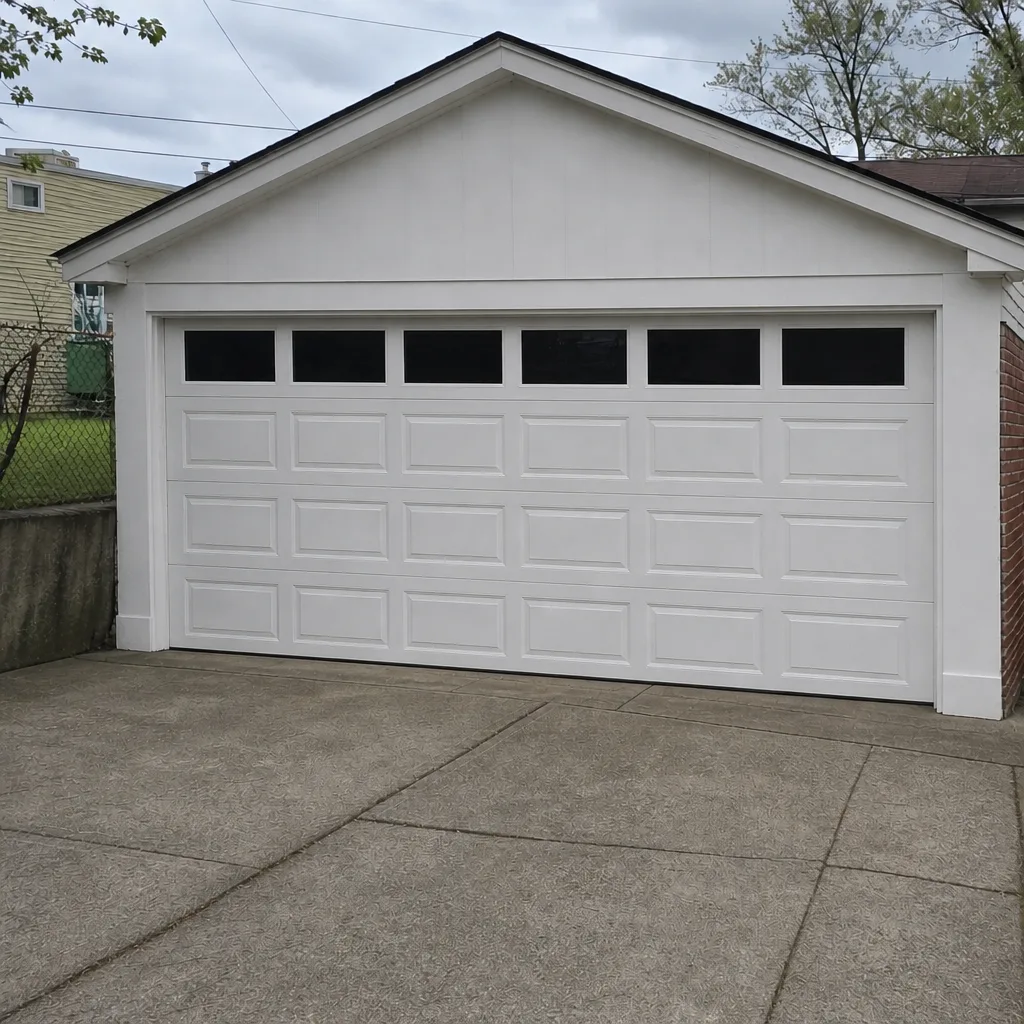
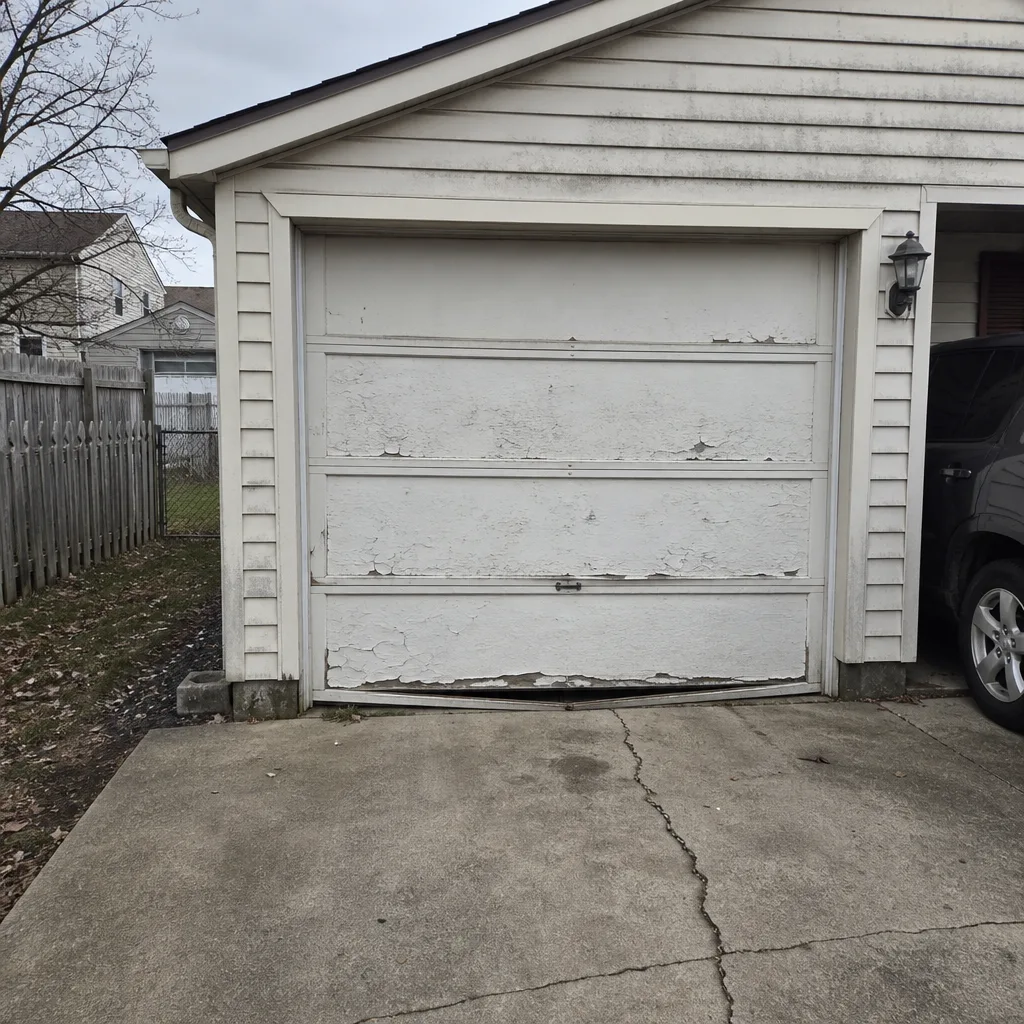
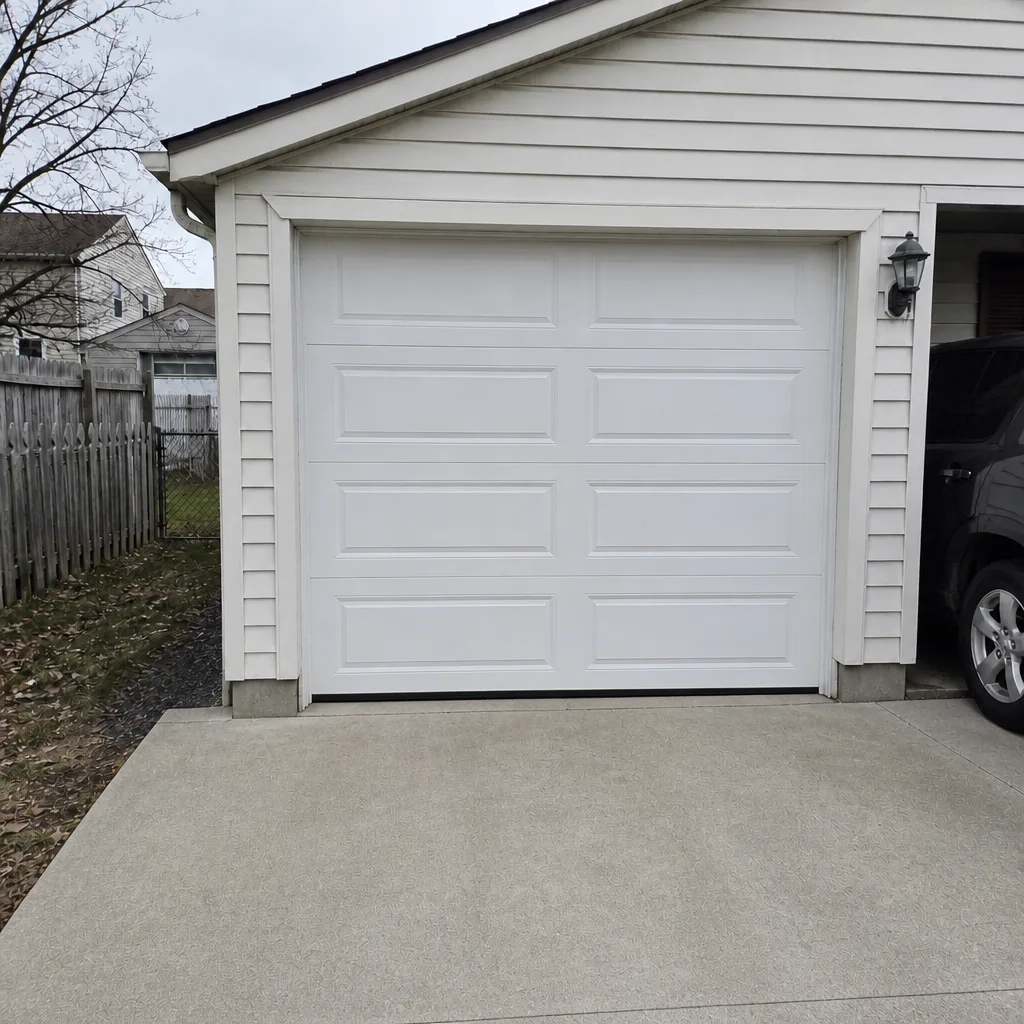
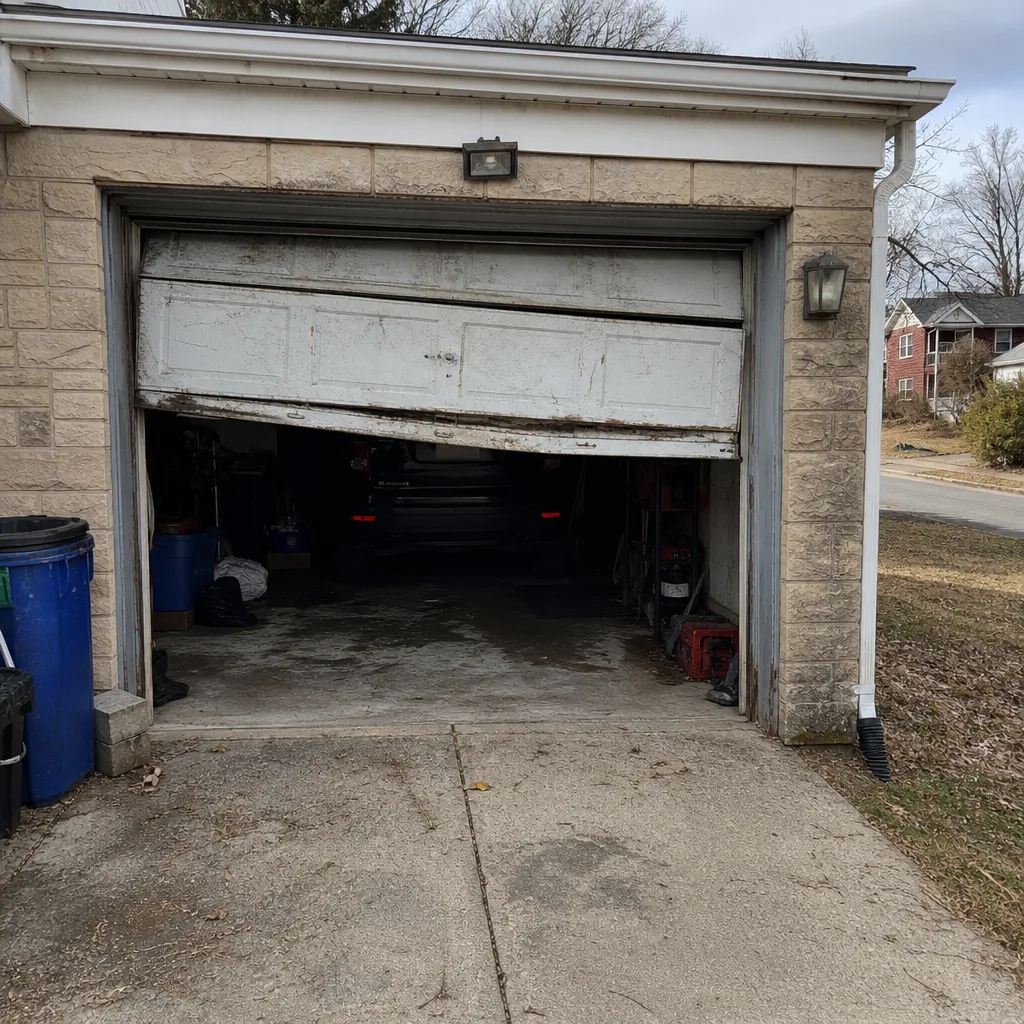
See the difference
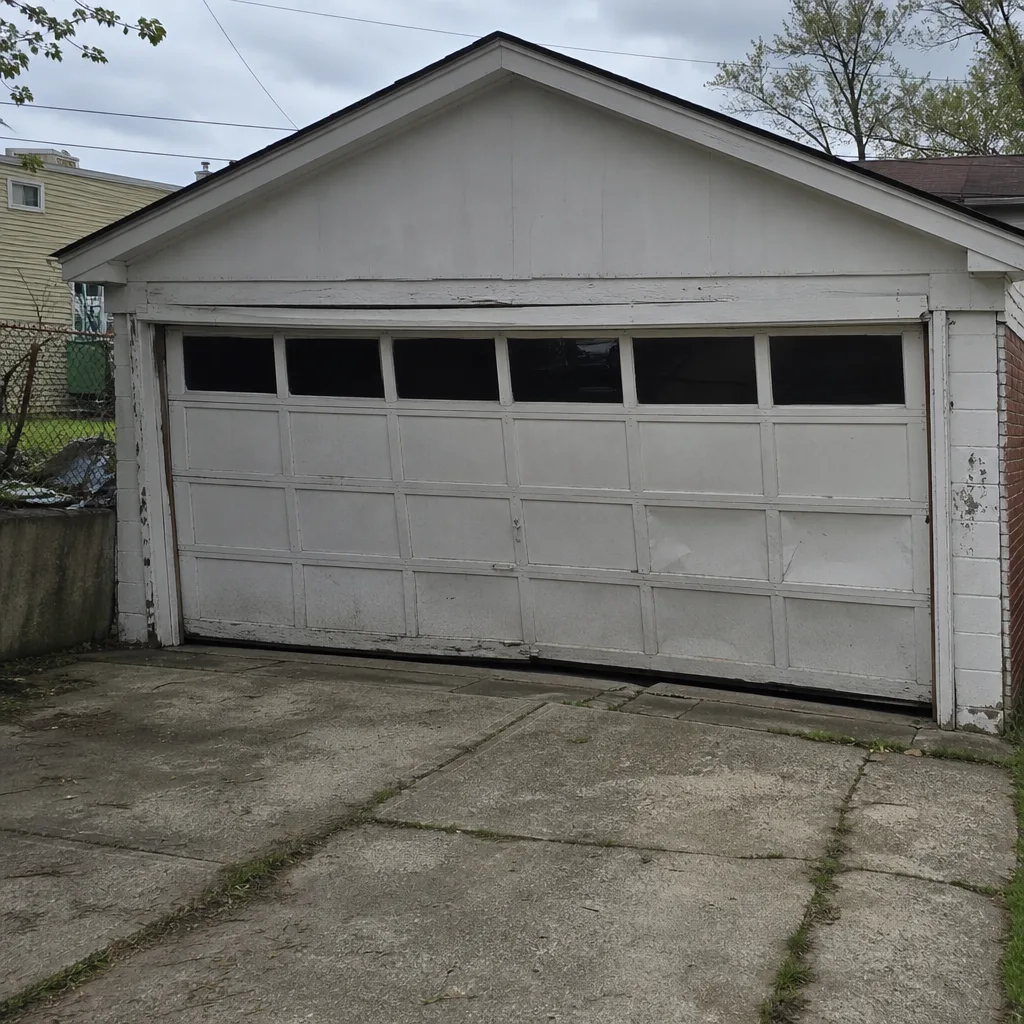 Before
 After
 Before
 After
 Before
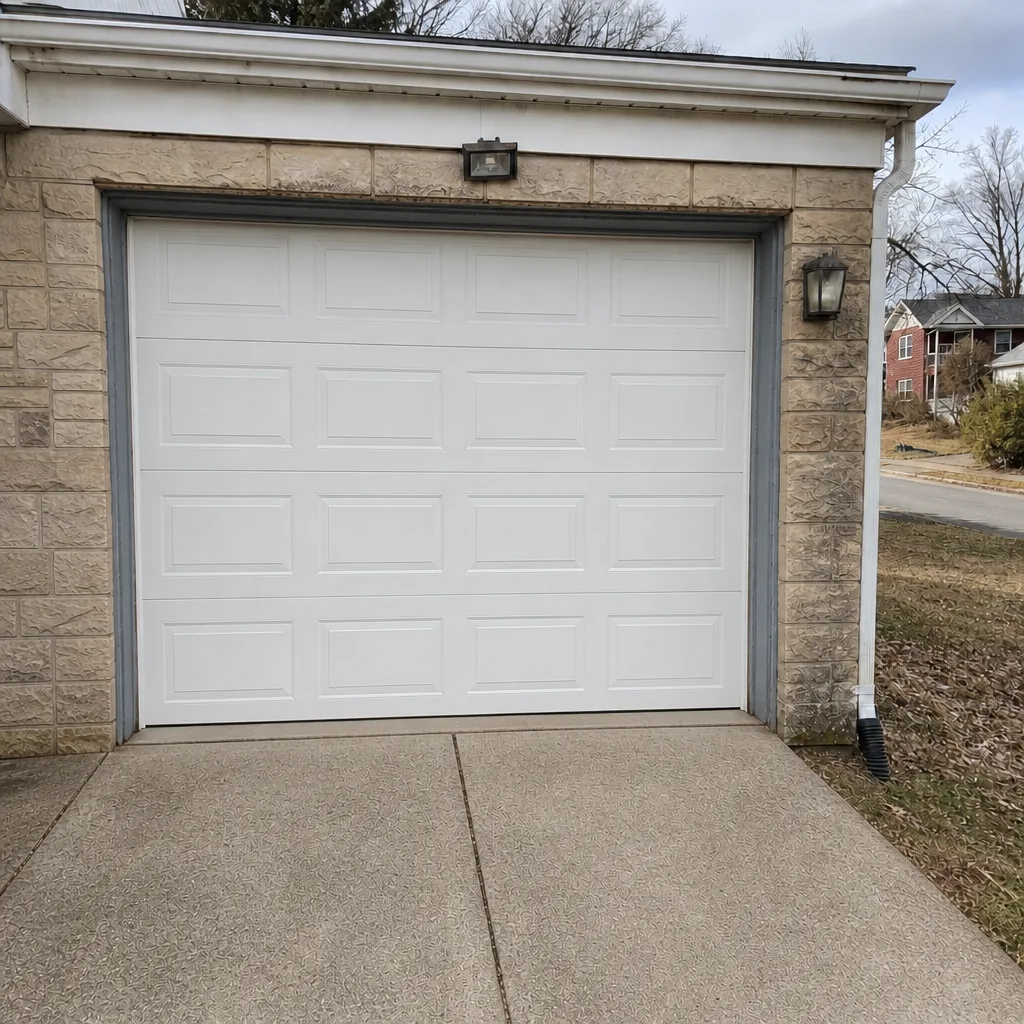 After
When to Call a Professional
Some jobs are a weekend project; some aren’t. Call a professional when a spring has snapped or a cable has frayed – those are the parts that can injure you. Call when the door won’t close and the safety sensors don’t fix it, when the opener is dead or the motor runs but the door doesn’t move, or when a track is bent from impact. Call when you’re planning a replacement and the opening isn’t standard, because sizing and low-headroom hardware need to be settled before ordering. And call when the door has started to feel heavy or won’t stay up on its own, since that’s a spring problem, not a door problem. Garage Door Repair Carrick offers free estimates in Carrick – call (833) 508-9951. We answer 24/7. Fast dispatch from 7am to 7pm, Sunday through Friday. We work on your brand – LiftMaster, Chamberlain, Genie, Clopay, and the rest – and we handle springs, openers, panels, and parts in one scope, so you don’t need a second vendor. Our technicians have up to 12 years of experience, and every price is quoted and agreed before any work starts. For the full picture of our repair work, see Garage Door Repair Carrick.
Frequently Asked Questions
Most garage door repairs in Carrick run from about $90 for a simple adjustment up to $500 or more for a full opener replacement, with spring repair priced per spring. The written estimate sets the final price, and the price is quoted and agreed before any work starts. Call (833) 508-9951 for an exact quote – estimates are free.
No. We give you a written price before any work starts, and that written quote is the price. If the job turns out to need something different from what the estimate covered, we’ll talk it through with you first – you won’t get a surprise invoice after the fact. Call (833) 508-9951 to schedule a free estimate.
Often, yes. Many Carrick garages were built before the 16×7 standard, and post-war Cape Cods, brick rowhouses, and hillside splits frequently have openings that need custom sizing or low-headroom tracks. A proper measure of the opening and ceiling clearance settles it before anything is ordered.
Torsion springs mount on a shaft above the door and twist to lift it; extension springs run along the horizontal tracks and stretch. Torsion setups are quieter and fail in a more contained way, which matters in the attached garages common to Carrick. Both are wear items and both should be serviced by a trained technician.
Not always without a check. In pre-1980 homes, the garage circuit and panel may need attention before a modern DC-motor opener will run reliably. We check the circuit and the door’s weight before recommending a unit, so the opener matches your door rather than the other way around. Call (833) 508-9951 to talk it through.
Yes – repair first is the default. A single damaged panel, a worn roller set, a failed bottom seal, or a dead opener can all usually be repaired without a full replacement. We only recommend a new door when the existing one is beyond repair, such as rusted-through panels or a track bent past saving. Call (833) 508-9951 for a free estimate.
The Bottom Line
Carrick’s older housing stock changes what a garage door project looks like. Sizing is the first decision – measure the opening and the ceiling clearance before ordering anything, because low-headroom hardware and custom sizes are common here. Material choice should follow the freeze-thaw climate, with steel as the practical default and wood composite worth it only when the streetscape calls for it. Torsion springs fit the attached garages that dominate Carrick. Opener choice has to respect the home’s wiring and the door’s weight. And every price should be a written quote agreed before work starts. If your door needs repair, replacement, or just an informed look, that’s the conversation to have.
Written by the team at Garage Door Repair Carrick.