
Last updated November 21, 2026
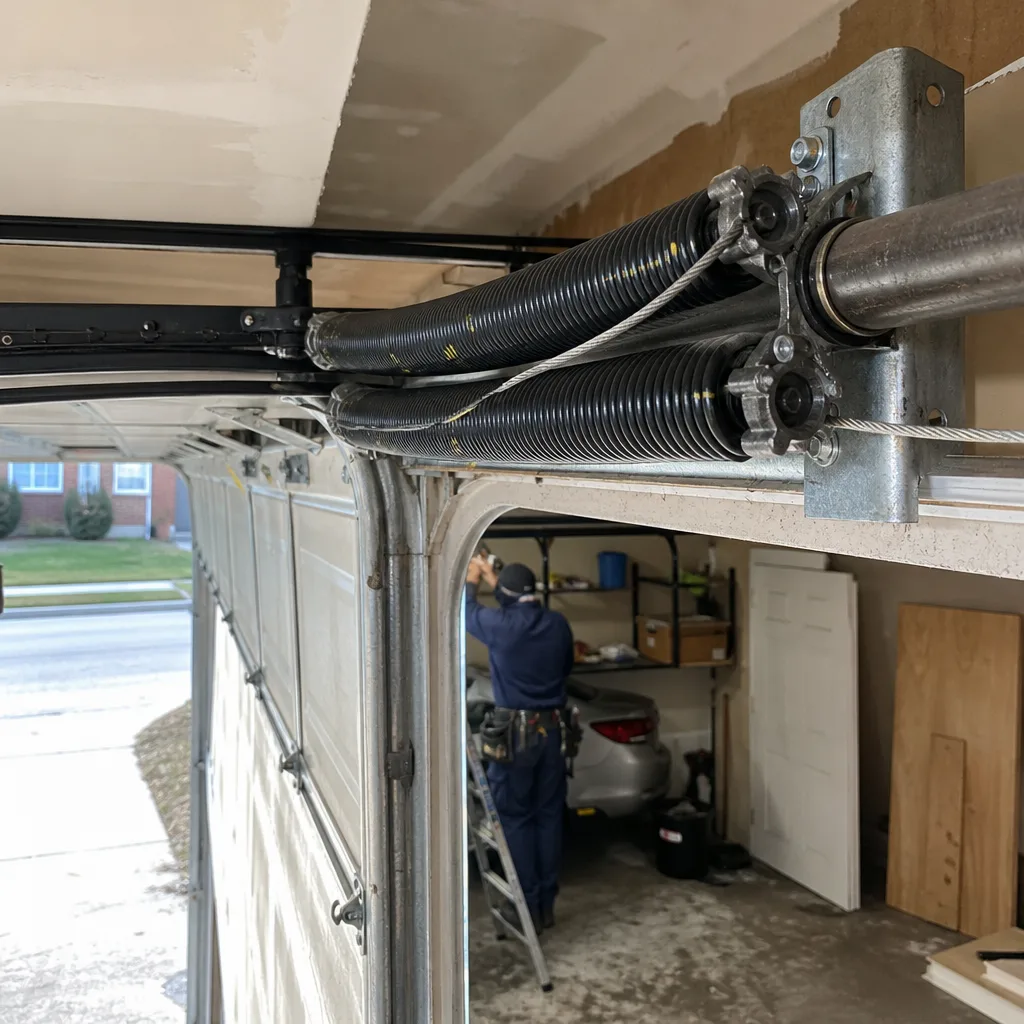
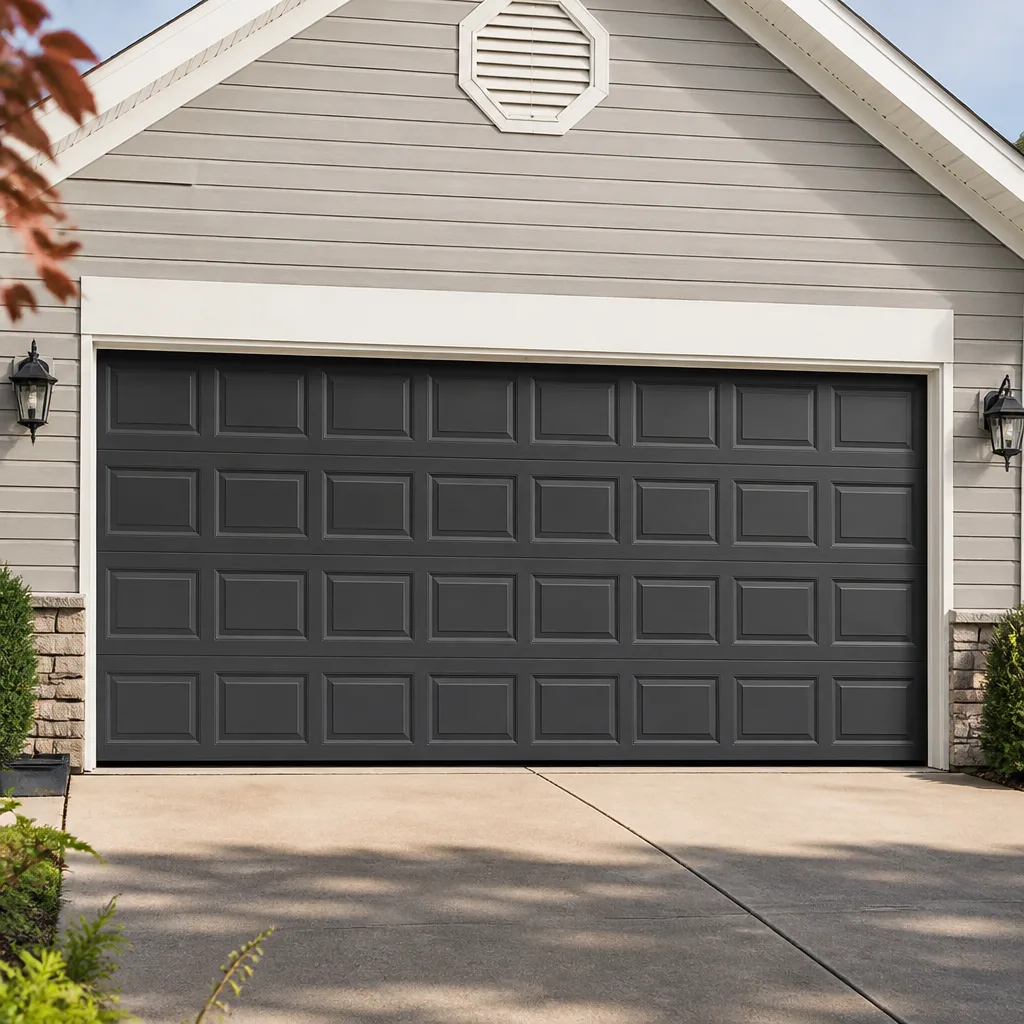 Raised-panel steel
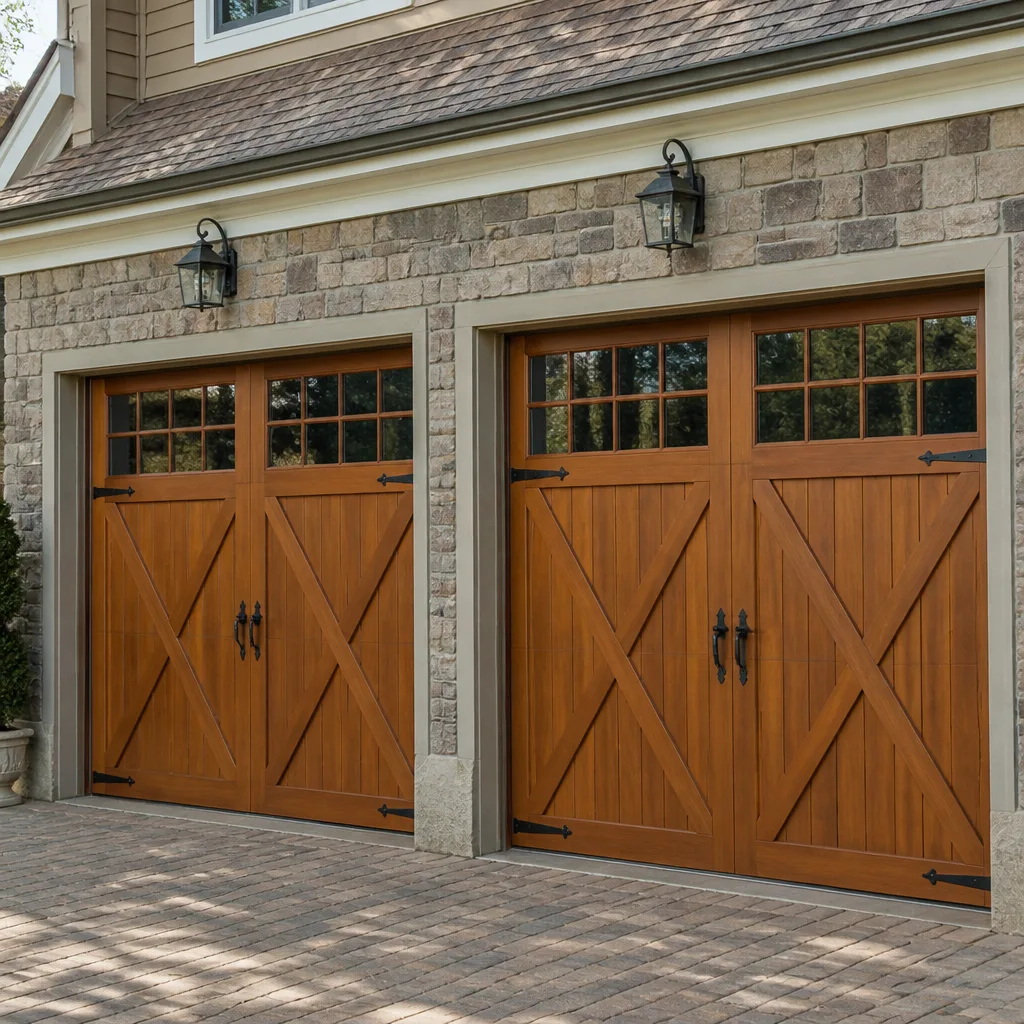 Carriage house
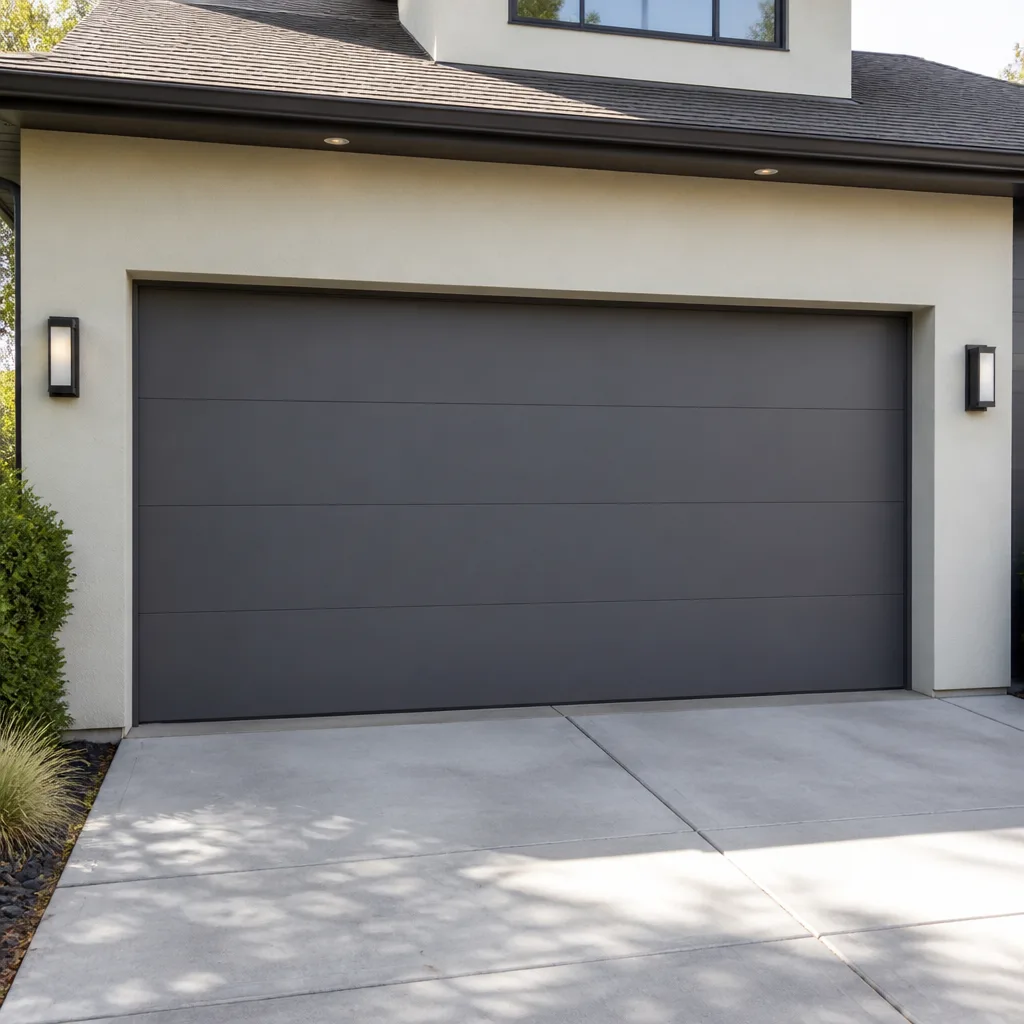 Modern flush
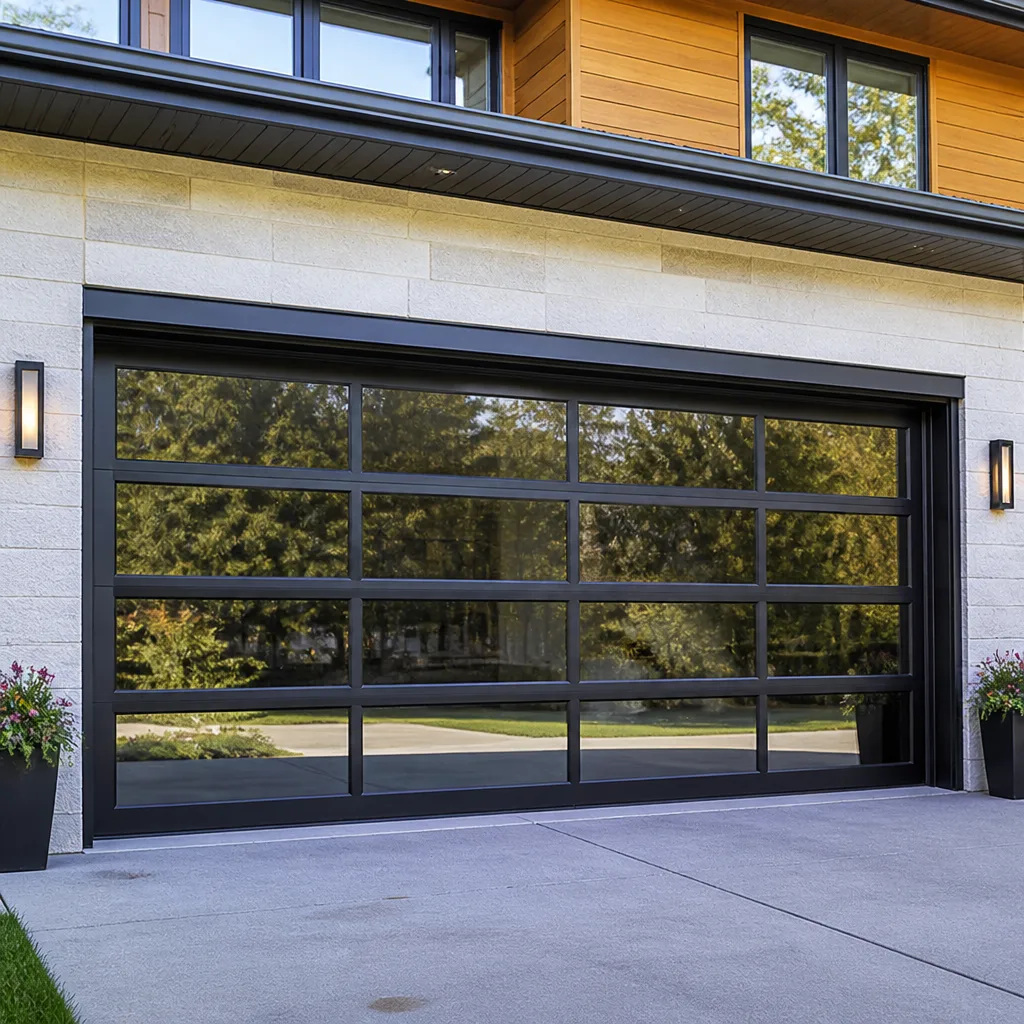 Full-view glass
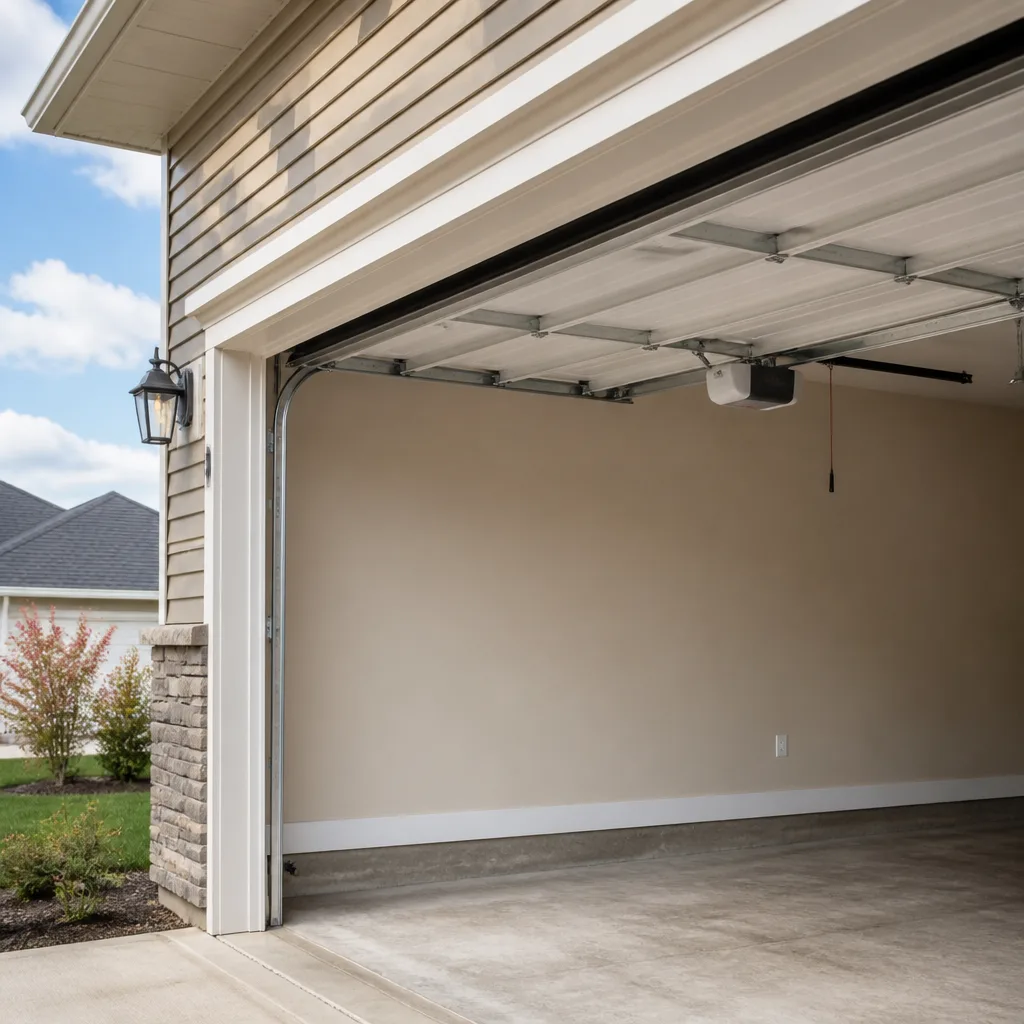 LiftMaster openers
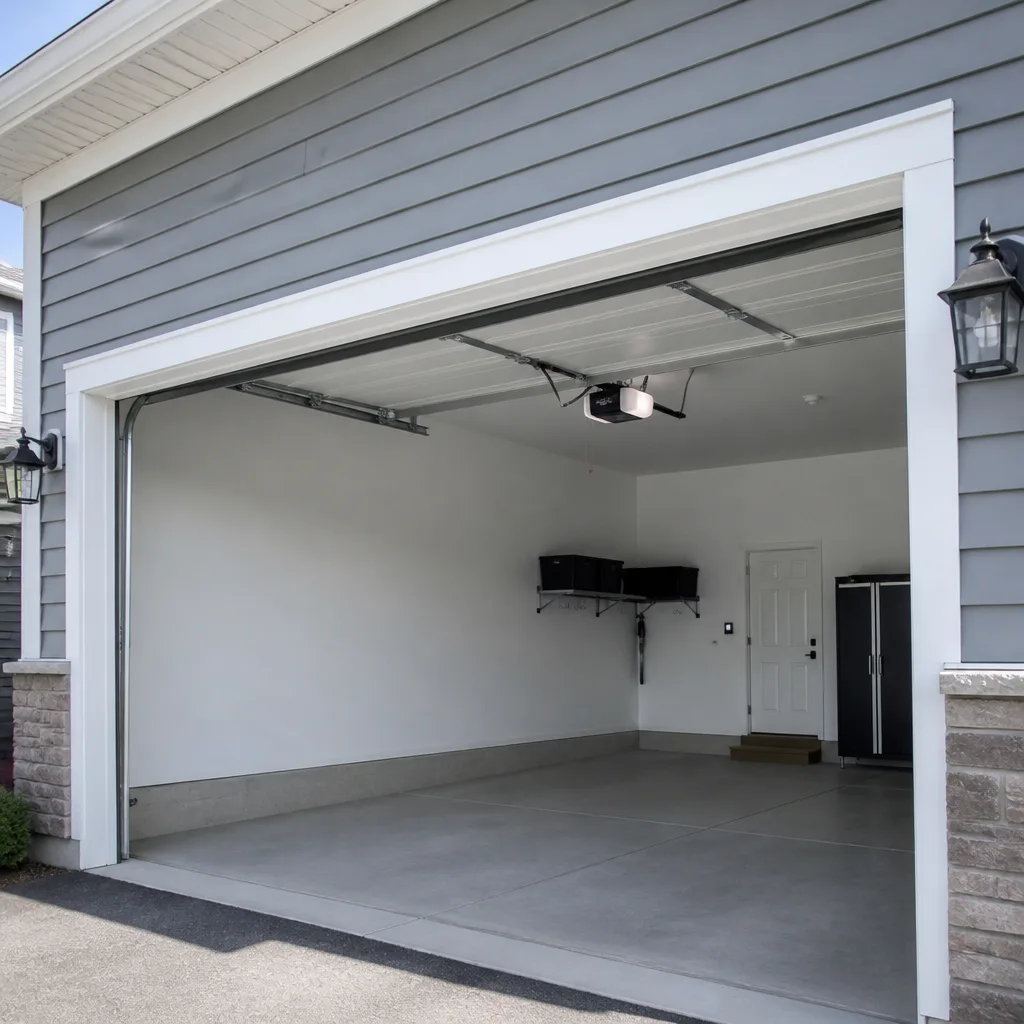 Chamberlain openers
Full 25-point door and opener safety check with every visit - springs, cables, rollers, tracks, and your LiftMaster or Chamberlain opener included
You get a price before we start. It does not change when the pro arrives.
Get your free estimateGarage Door Emergency Preparedness Guide for Carrick Homes
Most garage door emergencies aren’t really about the door. They’re about the moment you realize you’ve never rehearsed the response. If you have an automatic opener, there’s a good chance you’ve never pulled the manual release cord. The first time many Carrick homeowners touch it is during a power outage, in the dark, with a car trapped inside and no idea whether the door will hold or drop. A snapped spring or a dead opener has a specific resolution path, and it’s one you can learn before you need it. This guide walks through the release procedure for the common opener brands in Pittsburgh-area homes, how to prop a door with a broken spring safely, winter protocols for a frozen door, and what to have ready when you call. The goal is simple: when something fails, you already know what to do.
Quick Answer
A garage door emergency in Carrick comes down to three moves: keep people and vehicles clear of the door, secure it so it can’t move unexpectedly, and call for repair rather than forcing it. Know where your manual release cord is and how it works on your specific opener brand before you need it. For a broken spring or snapped cable, don’t operate the door at all – the risk of the door dropping is real. Call (833) 508-9951, and have your door size, opener model, and spring type ready so the right parts come on the first visit.
Styles & brands we work with
- Raised-panel steel
- Carriage house
- Modern flush
- Full-view glass
- LiftMaster openers
- Chamberlain openers
Table of Contents
- The Manual Release: Know It Before You Need It
- What to Do When a Spring Breaks
- When a Cable Snaps: Door Down vs. Door Up
- Winter Emergencies: The Frozen-Shut Door Protocol
- When the Opener Dies
- What to Have Ready When You Call
- Prevention: The Two-Minute Quarterly Check
The Manual Release: Know It Before You Need It
Every automatic opener has a manual release – a cord you pull to disconnect the door from the motor so you can lift it by hand. The mechanism differs by brand, and the differences matter when you’re standing under the door in the dark. Here’s how the release works on the five most common opener brands in Carrick and across Pittsburgh-area homes.
- LiftMaster: The release cord hangs from a trolley on the rail. Pull it straight down and toward the door to disengage. The door should then lift by hand with steady pressure. LiftMaster units often have a red or black handle on the cord, so it’s easy to find by feel.
- Chamberlain: Nearly identical to LiftMaster (same parent company), with a trolley-and-cord release. Pull down firmly. On some newer models the cord attaches to a lever you flip rather than pull, so check yours before an outage.
- Craftsman: Older Craftsman openers use a trolley release with a cord; some models have a lever on the trolley. The key difference: on worn units the trolley can stick, so pull slowly and evenly rather than yanking.
- Genie: Genie uses a screw-drive or belt-drive system depending on the model, and the release is usually a cord from the carriage. Some Genie units have an emergency release knob instead of a cord – identify which you have.
- Ryobi: Ryobi’s app-connected units use a cord-and-trolley release too, but the smart-home modules can leave the door “locked” in the app. If the app says locked, release it in the app before pulling the cord, or you’ll fight the mechanism.
The universal rule: stand to the side of the door, never directly under it, when you pull the release. A door that’s been disconnected from the motor is held up only by its springs and tracks – if a spring is already weak, the door can drop fast. If you’re not sure of your mechanism, have a technician walk you through it during a routine visit. Our technicians have up to 12 years of experience and can show you the release on your exact unit. The manual release is the single most important thing to rehearse, and it’s the one most people skip.
What to Do When a Spring Breaks
A broken spring announces itself – a loud bang, then a door that won’t lift or won’t stay up. The spring is what counterbalances the door’s weight, and when it fails, the door becomes dangerously heavy and unpredictable. Do not try to open or close the door manually after a spring breaks. The door can come down hard enough to cause serious injury. This is one of the few garage door jobs that should never be a DIY project.
Here’s what to do while you wait for a technician:
- Stay clear of the door. Keep people and vehicles away from the opening and don’t park directly under it.
- Don’t force the door. Don’t lift it, don’t push it, don’t try the opener again. A broken spring means the door has lost its counterbalance and every attempt to move it risks a drop.
- Prop it only if it’s already open and you need to secure the space. If the door is up and stuck, use a sturdy, purpose-made brace or a solid piece of lumber rated for the load – never a chair, a bucket, a stack of boxes, or a broom handle. Those collapse.
- Call for repair. A dedicated spring repair service is the right call, not a generalist. Springs are the most hazardous and technically demanding part of the trade.
On pricing: a spring replacement is quoted per spring, and matched pairs are usually replaced together. Your written estimate sets the final price before any work starts, so there’s no surprise on the invoice. If your door is stuck and you need help now, call (833) 508-9951. We answer 24/7, and fast dispatch runs from 7am to 7pm, Sunday through Friday.
When a Cable Snaps: Door Down vs. Door Up
A snapped cable is a different animal from a broken spring, and the risk profile depends on where the door was when it happened. The cables run along the sides of the door and keep it tracking straight; when one fails, the door can go crooked or drop. Here’s the difference.
If the door is DOWN when the cable snaps
This is generally the safer scenario because the door is resting on the floor and can’t fall further. But it’s also the more frustrating one, because the door may now be jammed in the closed position and you can’t get your car out. Don’t try to force it up – a door with a failed cable can twist in the tracks and do more damage, or swing out of the track entirely. Leave it down, keep clear, and call for repair. If you need your car, plan around the door until a technician can secure it.
If the door is UP when the cable snaps
This is the higher-risk scenario. A door stuck in the up position with a failed cable is being held by whatever is left of the cable and springs, and it can drop without warning. Don’t walk under it, don’t try to lower it, and don’t prop it with anything that isn’t rated for the load. Keep everyone out of the opening and call immediately. A trained technician can secure the door safely before anything else happens.
In either case, the immediate steps are the same: clear the area, don’t operate the door, and call for help. For garage door repair on a snapped cable, a technician needs to see the door to quote it accurately, and the price is agreed before work begins.
Winter Emergencies: The Frozen-Shut Door Protocol
Carrick winters bring freeze-thaw cycles that can bond a garage door to its frame overnight. The door looks fine, but the opener strains, the motor hums, and nothing moves. Forcing it is the fastest way to burn out the opener motor or crack the weatherstripping. Here’s the protocol that doesn’t.
- Stop using the opener. If the door doesn’t move on the first attempt, don’t hit the button again. Repeated strain on a frozen door is what kills opener motors and strips gears.
- Break the bond by hand, gently. From inside, push the door slightly inward at the bottom to break the ice seal. Don’t yank, don’t pry with a tool, and don’t use hot water – it refreezes and makes it worse.
- Clear the ice from the bottom seal and tracks. A plastic scraper works. Avoid metal tools that gouge the weatherstripping or the track.
- Check the photo-eye alignment. Winter grime and condensation on the safety sensors near the floor can cause the door to reverse or refuse to close. Wipe them clean.
- Test the door by hand first. With the release pulled, lift the door a few inches. If it moves freely, re-engage the opener and try again. If it’s still binding, stop and call.
A frozen door that won’t free up after these steps usually points to a deeper issue – a failing spring, a bent track, or a worn roller – that a technician should look at. Winter is also when we see the most opener failures, because the motor is working harder against cold-stiffened grease and a heavier door. If your opener is a Chamberlain or Genie unit that’s been straining all season, a tune-up now beats a breakdown in January. Call (833) 508-9951 for a free estimate.
When the Opener Dies
An opener that won’t respond is usually one of four things: a power outage, a tripped breaker, a dead remote battery, or a failed logic board or motor. Work through them in that order before assuming the worst.
- Check the power. Is the outlet live? Is the breaker tripped? Is the unit’s power indicator on?
- Check the remote and wall button. If the wall button works but the remote doesn’t, it’s the remote or its battery. If neither works, it’s the unit or the wiring.
- Check the safety sensors. Misaligned or dirty photo-eyes will stop a door from closing. Look for a blinking light on the unit.
- Check the manual release. If the door is disconnected from the opener, the opener will run but the door won’t move. Re-engage the trolley.
If the unit is truly dead, the repair versus replace decision depends on the brand and age. We work on your brand – LiftMaster, Chamberlain, Genie, and Craftsman among them – so we can diagnose the actual fault rather than pushing a new unit. For garage door opener repair, a no-guesswork diagnosis saves you a return visit. If replacement is the right call, we handle garage door installation too, so you’re not chasing a second vendor. A dead opener during a power outage is where the manual release earns its keep – and where having rehearsed it matters most.
What to Have Ready When You Call
The difference between a one-visit fix and a two-visit fix is usually the information you give when you call. Dispatch can send the right parts on the first trip if you have a few details ready. Here’s what to gather before you dial – it takes two minutes and saves days.
- Door dimensions. Width and height, measured at the opening. This tells us the panel size and the spring size needed.
- Opener brand and model. Look for the label on the back of the motor unit or inside the light cover. Chamberlain, Genie, LiftMaster, Craftsman – the model number narrows down the parts.
- Spring type if you know it. Torsion (the horizontal spring above the door) or extension (springs running along the tracks). If you don’t know, that’s fine – it’s visible on arrival.
- What happened and when. A bang followed by a dead door points to a spring. A hum with no movement points to the opener. A door that’s crooked points to a cable.
- Whether the door is up or down. This changes the risk and the response.
With those details, dispatch can match the job to the right technician and the right parts. Call (833) 508-9951. We answer 24/7, and fast dispatch runs from 7am to 7pm, Sunday through Friday. Prices are quoted and agreed before any work starts, and the estimate is free.
Prevention: The Two-Minute Quarterly Check
Most emergencies give warning signs weeks before they happen. A quarterly two-minute check catches them early. It won’t stop every failure, but it catches the ones that are predictable.
- Listen to the door. Grinding, squealing, or a door that sounds like it’s working harder than it used to means worn rollers or a dry track.
- Look at the springs. A torsion spring with a visible gap means it’s broken or about to be. Extension springs should have safety cables running through them.
- Test the balance. Pull the manual release, lift the door halfway, and let go. A properly balanced door stays put. One that drops or rises on its own needs attention.
- Test the safety reverse. Put a small object in the door’s path and close it. The door should reverse. If it doesn’t, the safety system needs service.
- Check the weatherstripping. Cracked or torn seals let in water and cold, which is what freezes doors shut in Carrick winters.
These checks are safe to do by hand. Anything that involves the springs, cables, or the opener’s internal parts is not – those are trained-professional territory. If a check turns up something, call for a free estimate before it turns into an emergency. A repair caught early is almost always simpler than a repair caught at 7am with a car stuck inside.
Common Mistakes to Avoid
- Pulling the manual release while standing under the door. Always stand to the side. A disconnected door can drop if the springs are weak, and the release is exactly when you find out.
- Forcing a frozen door with the opener. Repeated button-pressing on a frozen door is the fastest way to burn out a motor. Break the ice by hand first.
- Propping a broken door with furniture. Chairs, buckets, and brooms collapse under a garage door’s weight. Use a purpose-made brace or rated lumber, and only if the door is already up.
- Trying to fix a broken spring yourself. Torsion springs store enormous energy. This is not a DIY job, and no video makes it safe.
- Calling without the door size or opener model. Missing details mean a second visit and a longer wait. Have them ready.
- Ignoring a door that sounds different. Grinding and squealing are early warnings. Waiting until it fails turns a small repair into an emergency.
- Assuming a dead opener means a new opener. Often it’s a sensor, a battery, or a tripped breaker. Get a diagnosis before replacing anything.
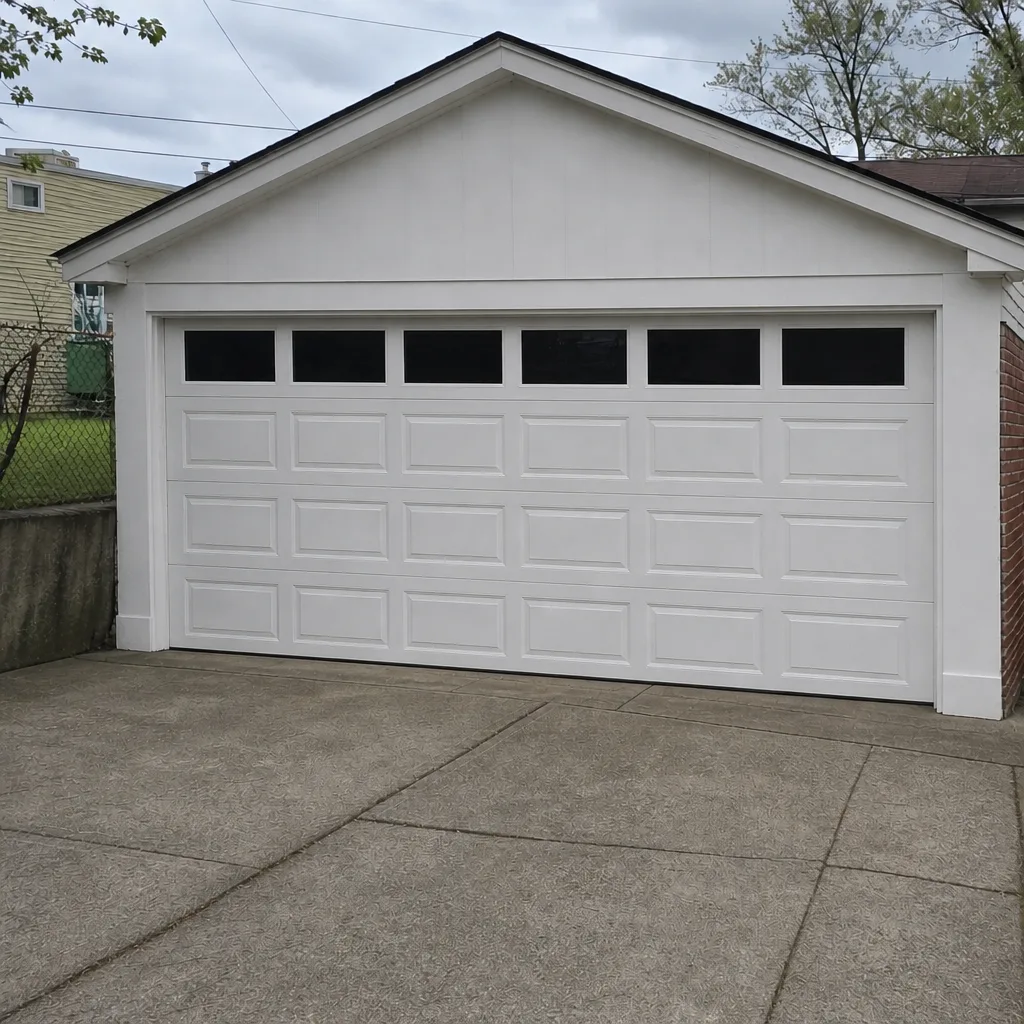
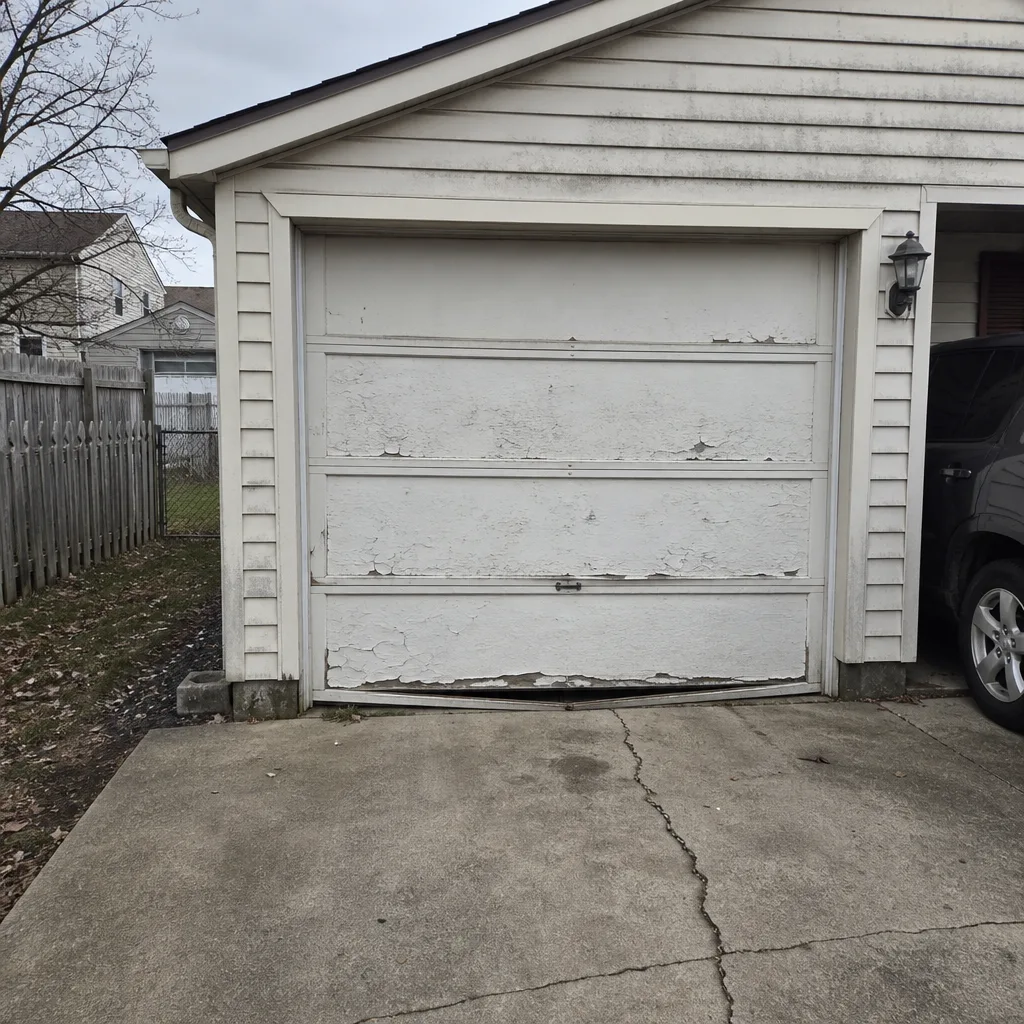
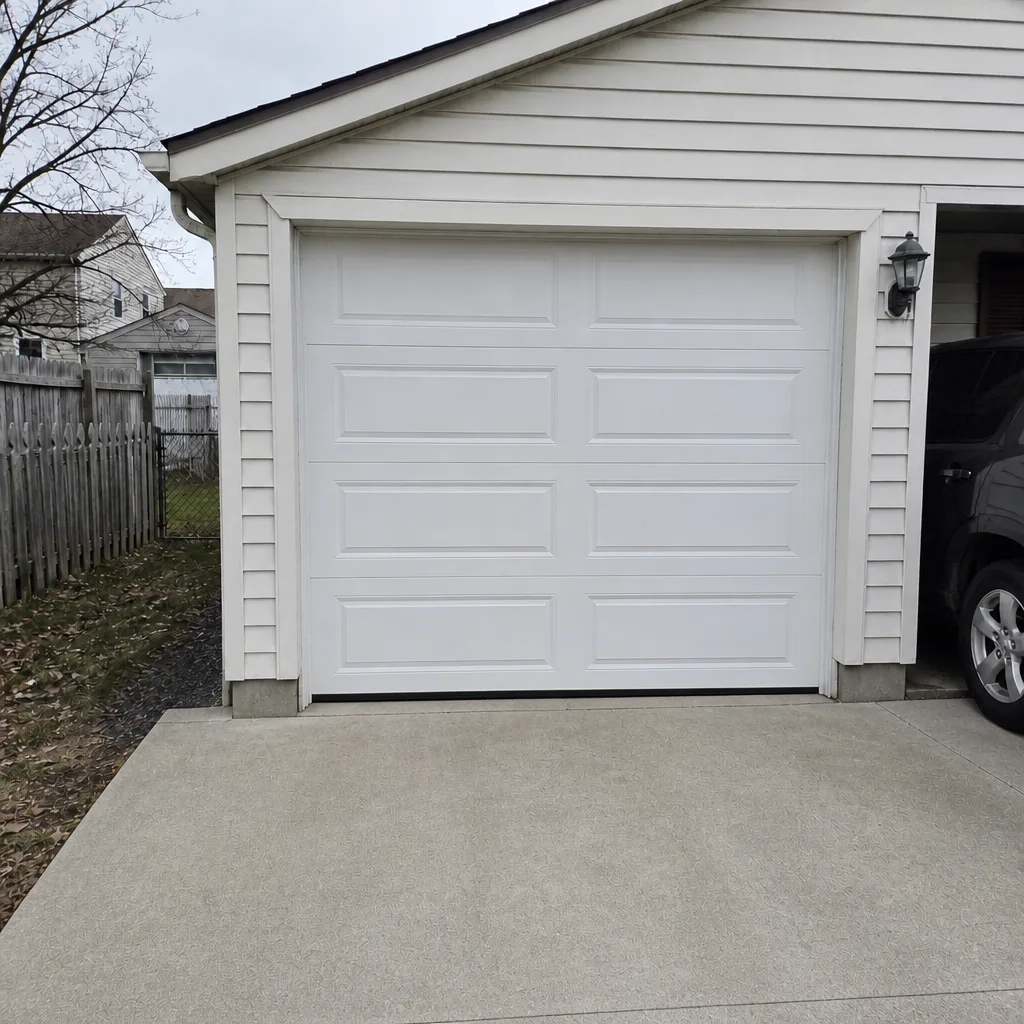
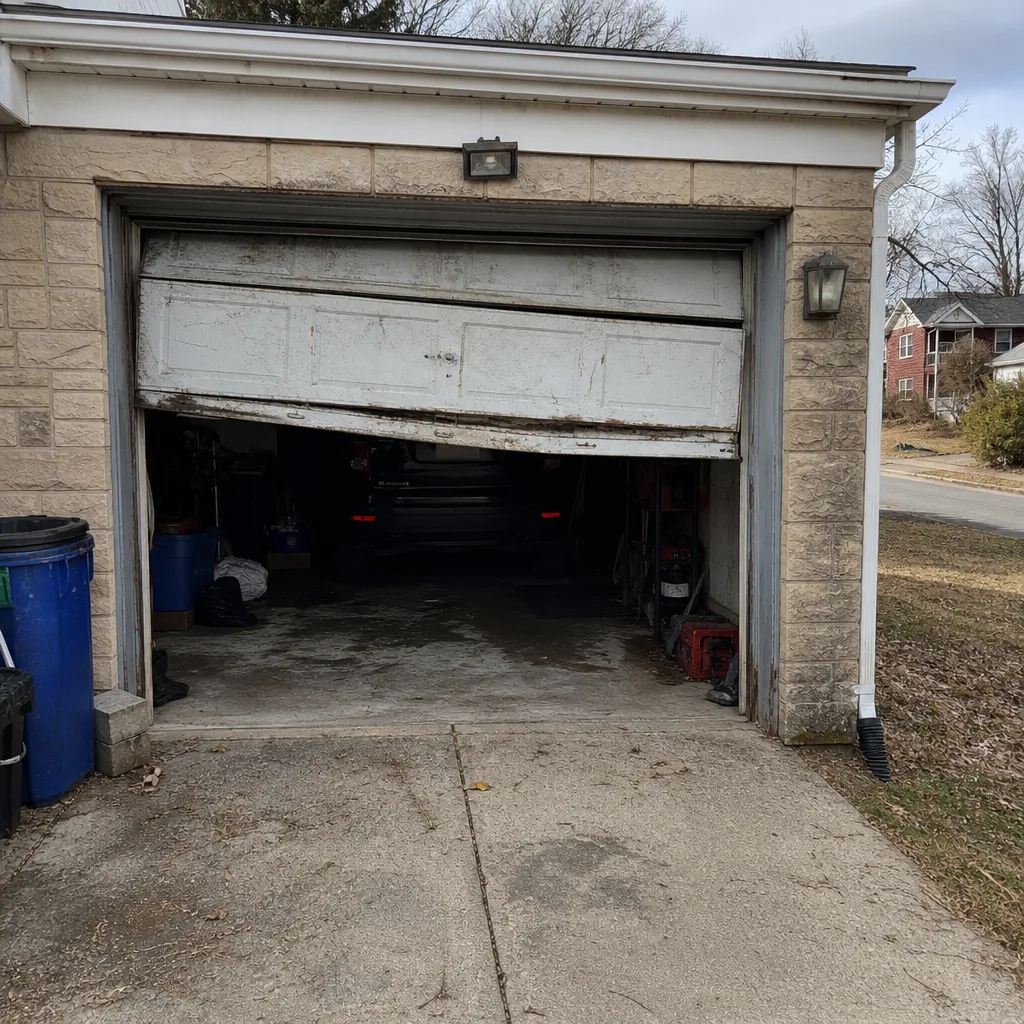
See the difference
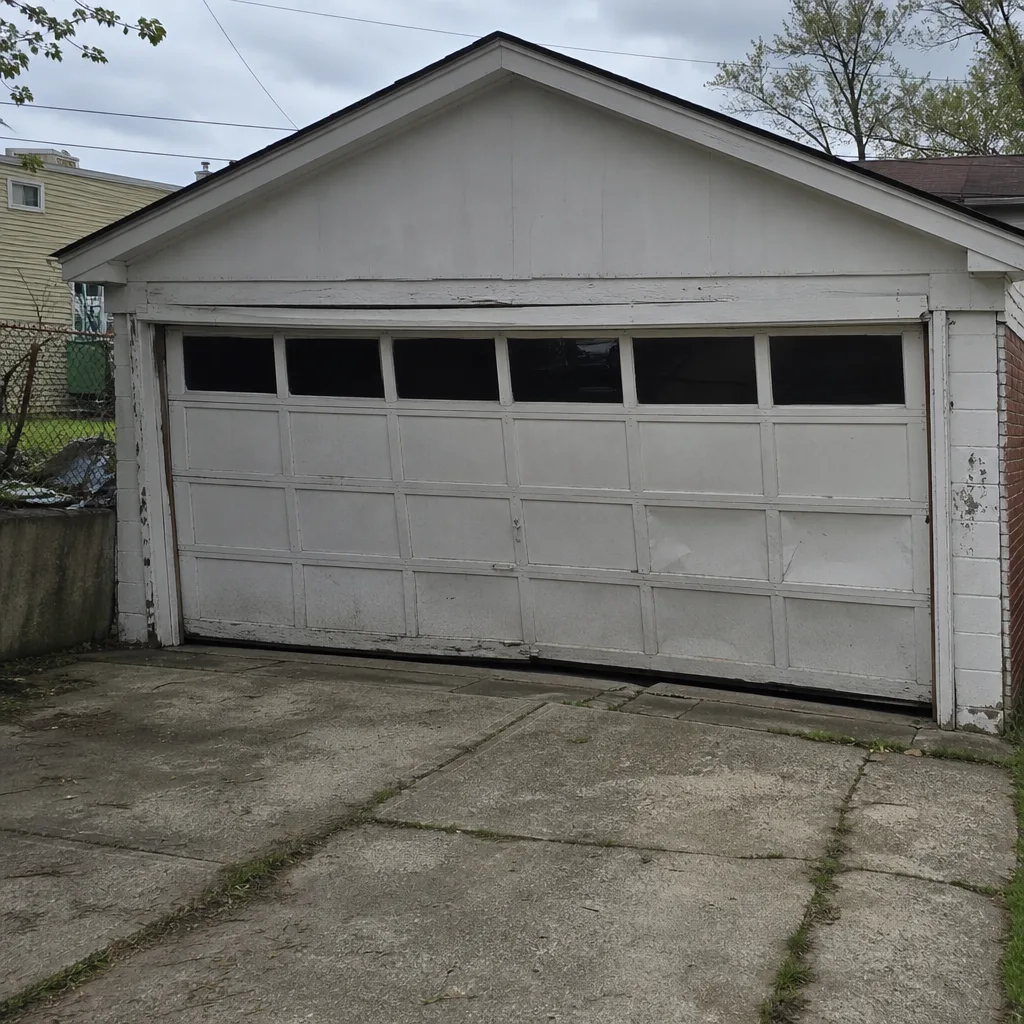 Before
 After
 Before
 After
 Before
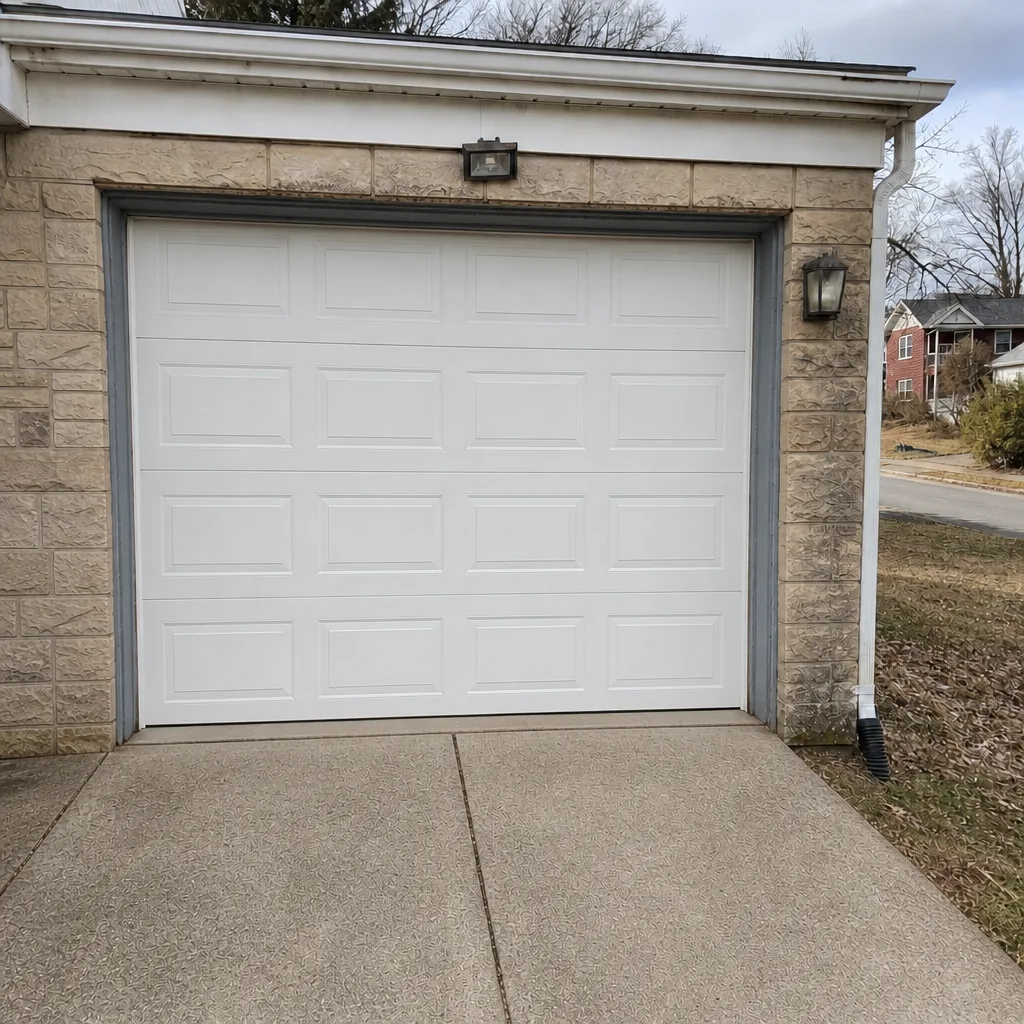 After
When to Call a Professional
Call a professional for anything involving springs, cables, or the opener’s internal parts. Those components store energy or carry electrical current, and both can hurt you. Call immediately if a spring has snapped, a cable has failed, the door is crooked or off its track, or the door dropped unexpectedly. Call for a free estimate if the door is grinding, the opener is straining, the safety reverse doesn’t work, or the weatherstripping is failing before winter. Garage Door Repair Carrick offers free estimates in Carrick – call (833) 508-9951. We answer 24/7, and fast dispatch runs from 7am to 7pm, Sunday through Friday. The written estimate sets the price before any work starts.
Frequently Asked Questions
Keep everyone clear of the door and don’t try to open or close it. A door with a broken spring has lost its counterbalance and can drop without warning, so the safest move is to leave it alone and call for repair. Have your door size and opener model ready so the right parts come on the first visit. Call (833) 508-9951 for an exact quote – estimates are free.
Yes, we offer same-day service for repair calls. We answer 24/7, and fast dispatch runs from 7am to 7pm, Sunday through Friday. A call outside dispatch hours is booked into the next opening. Have your door dimensions, opener brand, and whether the door is up or down ready when you call – it speeds up dispatch.
Pull the release cord down and toward the door to disconnect it from the motor, standing to the side rather than under the door. The mechanism varies by brand – LiftMaster and Chamberlain use a trolley-and-cord release, Genie sometimes uses a knob, and Ryobi’s app-connected units may need to be unlocked in the app first. If you’re unsure, have a technician show you on your exact unit.
No. Stop using the opener the moment the door doesn’t move – repeated strain is what burns out motors and strips gears. Break the ice seal by hand from inside, clear ice from the bottom seal and tracks with a plastic scraper, and test the door by hand before re-engaging the opener. If it still won’t move freely, call for service.
No. The written estimate sets the price, and the price is quoted and agreed before any work starts. We diagnose the actual fault first, so you’re not paying for a guess. Call (833) 508-9951 for an exact quote – estimates are free.
The local professionals we connect you with are licensed and insured as their state requires. Our technicians have up to 12 years of experience and work across the major brands, including Chamberlain, Genie, Clopay, and Amarr. Call (833) 508-9951 to book a free estimate.
The Bottom Line
A garage door emergency in Carrick is manageable if you’ve rehearsed the response. Know your manual release and where it is on your opener brand. Never force a door with a broken spring or snapped cable – keep clear and call. Break a frozen door free by hand before touching the opener. Have your door size, opener model, and spring type ready when you call so the right parts arrive on the first visit. And run the two-minute quarterly check to catch failures early. For Garage Door Repair Carrick, the goal is the same door fixed right, with a free estimate and a price agreed before work starts. Call (833) 508-9951. We answer 24/7. Fast dispatch from 7am to 7pm, Sunday through Friday.
Written by the team at Garage Door Repair Carrick.